Showing posts with label Arabs. Show all posts

09 July, 2009

Next it'll be separate water fountains...

Pool Boots Kids Who Might "Change the Complexion"

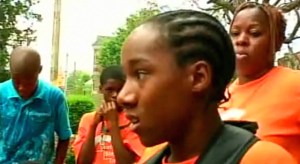
More than 60 campers from Northeast Philadelphia were turned away from a private swim club and left to wonder if their race was the reason.

"I heard this lady, she was like, 'Uh, what are all these black kids doing here?' She's like, 'I'm scared they might do something to my child,'" said camper Dymire Baylor.


Jaffa pool restricts entry of Arab residents
Jewish neighborhoods' committees find original, controversial way to deal with violent incidents by local Arab pool goers by restricting their access to facility for one day every fortnight.

---------------------------------

You know, if people put half the effort into solving the problems as they do to blaming each other and writing nasty comments on these articles, we as a human race could be way past this. This is 2009, right?

19 May, 2009

Crosspost: "Ghost Worlds"

A great story about a tour which reveals the lost Palestinian towns of what is now Tel Aviv, and about the other side of Yom Ha'atzmaut/Israeli Independence Day, known to some Arabs as Al Nakba/The Disaster.
In each village we heard the stories of relatives scattered in every direction of the Palestinian Diaspora: Gaza, Amman, Cairo, Baghdad, Nablus, northern Israel, Lebanon, Canada. The randomness of the results of those frantic choices resonated and overlapped in both familiar and unfamiliar ways with the Jewish Diaspora. Each guide told us how their families had come to leave their land, bringing alive the terror and uncertainty of the years 1947 and 1948, proving how academic are the debates about whether the Palestinians of the region were exiled or fled. Life was made unbearable in various ways, and eventually everyone in the region was pushed further and further south, first to Jaffa itself, then maybe to Gaza or the open sea.
Continue reading "Ghost Worlds"...

16 March, 2009

Improving Middle East relations, one Skype-ing at a time

A Skype conversation with someone who randomly messaged me, during the Gaza War

hi
hi
I AHMAD FROM SYRIA
hi Ahmad. I'm Daniel from the US
IAM 24YEARS
i'm almost 28
what do you do in Syria?
I student in medical school
wow! that's great! hard?
thank you
i'm in school to by a psychologist
do you see children in GAGA KILL BY TANK AND F16
only in newspapers
WHY
WATCH TV ALGAZIRA OR ALMNAR
i can't see those where i live
just pictures on the internet
it's TERRIBLE
very, very sad
ARE YOU ISRAEL
yes, i am in Jerusalem
where are you in Syria?
DO YOU LIKE ARAB
yes
i work with many arabs
DO YOU HAVE FRIEND ARAB
yes
ARE YOU SOLIDER NOW
no, i am not a soldier
REALLY I NOW ALL ISRAIL IS IN ARM
there are many soliders, but many many people are not soldiers. they are not fighting.
DID YOU KILL ANY ARABIAN
no, never
and i don't want to
THANK YOU WE CAN TO LIVE TOGETHER
i really really want that
many many people here want that too
WHICH ONE WILL WIN
i hope the war stops and there is peace. then we all win.
THANK YOU
you are very welcome
NICE TO MEET YOU
you too, Ahmad
ARE YOU MARRIDE
no, i am not
are you?
NO IAM LOKINK FOR
well, i'm sure school is keeping you with a lot of work also
DO YOU VISITED ARAB
i visited Jordan and Tunisia
i want to visit Egypt too
have you visited the US?
I invide you to vist syria
thank you
a friend told me that Damascus is very beautiful
i am interested to visit there
yes it is
no IDIDNT AND I DONT WANT VIST US
i invite you to Israel, but it is hard for Arabs to come here sadly
I NOW

02 January, 2009

A snippet of Israeli cinema

Aviva, My Love (2006)
Aviva, a hard-working hotel cook in the small northern Israeli town of Tiberias, is on the brink of finally fulfilling her lifelong dream. For years she kept her remarkable writing abilities under wraps, until her sister, Anita, introduces her to Oded, an accomplished novelist.
Trailer
IMDB


Walk On Water (2004)
Eyal, an Israeli Mossad agent, is given the mission to track down and kill the very old Alfred Himmelman, an ex-Nazi officer, who might still be alive. Pretending to be a tour guide he befriends Himmelman's grandson Axel, who is in Israel visiting his sister Pia.
Trailer
IMDB


Beaufort (2007)
The chronicles a group of soldiers positioned at the 12th century Crusader stronghold of Beaufort Castle: their daily routine, their feelings and their fears, and explores their moral dilemmas in the days preceding the withdrawal and end of the 18-year South Lebanon conflict.
Trailer
IMDB


Bonjour Monsieur Shlomi (2003)
16 year old Shlomi lives with his restless mother, his soldier brother and their ill grandfather. One day, the school's principal finds out Shlomi is actually a genius and tries to get him into a more suitable curriculum. However, Shlomi is more interested in taking care of his family and his new love interest, the beautiful girl next door.
Preview
IMDB


Late Summer Blues (1987)
Four Israeli teens spend a final summer of freedom before they are drafted into the Army during the 1970 Suez War. They discuss their futures, politics, and the occupation of the West Bank in the volatile region. The quartet goes from a festive high school graduation ceremony to anxiety when of their classmates is the first to be killed in conflict.

Preview
IMDB


Waltz With Bashir (2008)
One night at a bar, an old friend tells director Ari about a recurring nightmare in which he is chased by 26 vicious dogs. The two men conclude that there's a connection to their Israeli Army mission in the first Lebanon War of the early eighties. Ari is surprised that he can't remember a thing anymore about that period of his life. He needs to discover the truth about that time and about himself. As Ari delves deeper and deeper into the mystery, his memory begins to creep up in surreal images.
Trailer
IMDB


Other films...
Late Marriage (2001)
Broken Wings (2002)
Yossi & Jagger (2002)
Paradise Now (2005)
The Syrian Bride (2004)
Someone To Run With (2006)

29 December, 2008

Another entry under "Things I Wasn't Expecting"

As I spent last Christmas in Nazareth, I decided that this year I could celebrate in Jerusalem. I had debated going to Bethlehem, but finally decided not to for a few reasons, namely that it would be really crazy busy there and my Israeli friends wouldn't be able to go with me (Israelis are forbidden from entering Bethlehem because it's in Area A).

Christmas in Israel is, as one can imagine, hard to spot. As 80% of the population is Jewish and most of the remaining 20% are Muslim, finding Christians can be a little tough. The other reason is that the Arab Christian community is growing smaller and smaller due to a combination of discrimination by the Israeli government for being Arabs and by the Arab population for being Christians. Their middle/upper-class mobility is also a bone of contention within the Arab community, but also allows them to afford to emigrate elsewhere. As the Arab Christian population has halved in the past 50 years, this is clearly a popular option.

That's not to say that Israeli is entirely devoid of Christmas. There are a number of shops in Arab East Jerusalem which had Christmas displays or even just a Christmas tree in the front window, and there's a lingerie store in Tel Aviv that had some very suggestive Santa outfits, if you catch my drift. Still, it's definitely a stark contrast to the United States where one is practically struck over the head by Christmas as soon as one leaves the house.

This led me to have to create my own Christmas atmosphere. The hard part, for me, was remembering to do it. Even with my Advent calendar, it was still quite easy to forget that the days of December quickly flying by and, if wasn't until Christmas was almost upon me, that I got out my Christmas playlist on iTunes and started really getting into the spirit.

For Christmas Eve, I decided to go to the Old City of Jerusalem for services. There is a Lutheran church in the Christian quarter that I was always keen on going to but never quite got around to; that and they have services on Sunday mornings, which is a business day here. So I figured a German Lutheran church would be pretty similar to what I was used to.

Suffice to say, I was mostly correct with a few slight corrections. For one, Germans have different tunes to some of the traditional Christmas songs most Americans know. Second, half the church was filled with Jewish Israelis who came for the service. Apparently, they like the atmosphere and the music. And, no, the irony of a German church full of Jewish Israelis was not lost on me.

The service itself was simple, as are most services on high holy days. There was lots of singing (lots!), gospel readings in German and Hebrew (with some English and Arabic thrown in now-and-then), and candle-lighting. And it's in one of those old, Gothic-style churches that I love.


Afterwards, we went to a pub where a friend works for their annual Christmas party: Santa hats, Christmas lights, techno music, the works. And, as only happens in Israel, the Hasidic Jews show up. To cause trouble? No. They light a menorah (remember, it's also Hanukkah), dance for about five minutes, and then leave. You know, just to make sure no one forgets they're Jewish. Only in Israel.

29 November, 2008

Petra

Tomorrow morning: buy a ticket, get on a plane to Jordan, and go to Petra. Amazing. They carved buildings into mountains. I shit you not.

19 November, 2008

Behind enemy lines?

One of the benefits of being a Fulbrighter is the perks. Perks like invitations to the Ambassador's residence and getting flown to African countries for conferences. Say, for instance, Tunisia.

In an effort to share our work and experiences with each other, Fulbright (or IIE, or someone) decided to have two regional conferences during April: one in Tunis, Tunisia; and the other in Amman, Jordan. I was chosen for the Tunis conference so, along with three other of my fellow Israeli Fulbrighters, we packed our bags and headed to Africa. The purpose of the conference was to share our research topics and progress with other Fulbrighters from our region, MENA (Middle East/Northern Africa), and also to talk about our host countries and our experiences living there.

Now, if you took a second to think about what constitutes the Middle East and Northern Africa, you'll realize that it means all the Arab countries plus Israel. There was, at least on my part, a trepedation walking into a group of "Arab" students. Everyone knows that Israel doesn't have the best reputation with most Arab countries, and I wasn't sure what that meant to the other Fulbrighters and how that influnced their perspectives. Had they adopted the same opinions? What did they think about us having chosen Israel to study in? And, in the bigger picture, what did it mean to be going from Israeli to an Arab country? Was this something we could talk about, or did we just say we were Americans and leave out "via Israel"?

Our arrival, via Italy as there are no direct flights from Israel to most Arab countries, was mostly uneventful. Because of he flights available, we arrived in Tunis a two days before our conference started, which allowed us time to explore Tunis. Our conference was held in a hotel in Sidi Bou Said, a small town north of the capital, Tunis. It's primarily touristy, but a lovely coastal town full of cafes and shops.

The conference was such that we were all broken into various panels centered around a topic: mine, for instance was "Women's Issues and Public Health" (I study trauma/disaster response). Everyone gave a briefy explanation of their project and time in their host country, and then the floor was opened to questions. The breadth of topics was a little astounding, ranging from chemical engineering for low-cost housing in Morocco to a theatre company in Syria. We also had a trip to Carthage to see the ruins there, and saw the largest collection of mosaics in the world at a museum (the name of which I've forgotten).

While the presentations were interesting, equally beneficial was talking with the other Fulbrighters during our down-time. While we were all associated with our host countries, we were also all Americans so we had plenty to talk about. The Israeli/Arab differences only popped up a few time, mainly in the use of slang Arab phrases during presentations that some of us didn't understand.

Not to say the topic of the Israeli/Palestinian conflict didn't come up; in fact, one of the other Fulbrighters was born in Palestine. What was nice, though, was to discuss the situation with people not directly ivolved in it. I feel like it allowed for a more neutral discussion of things, which is hard to in Israel when all of your friends are either Jews or Arabs. It was also good to learn more about how the Arabs see the conflict and what their feelings are towards it and why, and also to explain the Israeli side of things. No one was trying to justify things, but with the experience of living in the countries involved it allowed for a more rich discussion of the whole situation.

There was some button-pushing, though. I somehow doubt the guy wearing a "Save Palestine" shirt just happened to have packed that in his suitcase. But he didn't disrupt our conversation on the topic (though he tried), so...מה לעשות?

It was interesting to hear what is reported in the Arab media, though, compared to what shows up in the Israeli news. More than a few times the story the Fulbrighters outside of Israel heard was in stark contradiction to what the Israeli media reported, and none of us could say for sure which was more accurate.

The conference was topped off with a reception at the US Ambassador's residence for all of us. The residence is located on the outskirts of Sidi Bou Said, and has an amazing view of the Bay of Tunis.

Afterwards, myself and two of the other Israeli Fulbrighters (Deb and Emily), trekked through Tunisia for another four days. We took louages (like group vans/מוניות שרות) to Kairouan (the fourth holiest city in Islam) and then on to Houmt-Souk, located on the island of Djerba in southern Tunisia. After two days in Houmt-Souk, we returned to Tunis via a train up the coast to fly back to Israel.

I won't bore you with all the gritty details, except to say that Tunisia is beautiful and we had an absolutely lovely time. We even ran into some Jewish, Hebrew-speaking Tunisians in Houmt-Souk, which is known for it's large Jewish population. They take pride in that there's no animosity between the Arab and Jewish communities in Djerba; the oldest synagogue in Tunisia is on Djerba, though we didn't get to see it. While we didn't directly address people's feelings on the Israeli/Palestinian conflict, no one seemed too phased by us having come from Israel. We're weren't advertising that fact either, though, so who knows for sure?

Two other fun things: the blue and white motif that is throughout Tunisia is apparently a law, or at least such a strong custom that no one dares to defy. And second: when we were in Gabes waiting to swith louages, I ducked into a cafe to buy a Coke and saw La Femme Nikita on TV! As I've mentioned before this show rates quite high on my favorites list, so I was very pleased to catch a glimpse of Nikita with Arabic subtitles.

The entire week, communication-wise, was kind of traumatic for me because I was dependant on Deb and Emily the whole time. The official language is Arabic and most people also speak French (a remnant of when Tunis was a French colony) but next to no one outside of Tunis spoke English, and since I don't speak Arabic and my French is practically non-existant...I'm pretty sure my broken Hebrew with the jewelry shop owner was my only direct conversation with a Tunisian for most of the trip. Weird.

Anyhow, check out the photo gallery for pictures from the trip. And Tunisia has the largest number of spas in the world (after France) so if you're ever looking for a relaxing get-away to the Mediterranian coast, I have a recommendation for you.

26 December, 2007

"We wish you a happy Arab/Christian/Jewish Christmas..."

This Christmas was the first Christmas I've spent away from my family. Though it was inevitable, it didn't make things any easier. Topped off with the fact that I'm in a non-Christian city which is practically devoid of any Christmas-related paraphernalia, this was slated to be a very different holiday than any I'd experienced thus far. It gave me a taste of what I would expect is the experience of non-Christians/Christmas-celebrators in the United States: an environment that is without any reminder of my childhood or religious traditions. I was, therefore, looking forward to a more Christmas-y atmosphere once I arrived in Nazareth.

Our trip to Jesus' childhood home started in Tel Aviv with Emily, Deborah, and I taking a sherut to Nazareth. After a two hour drive and another half-hour on foot, we arrived in the old city of Nazareth. We had made arrangements with Emily's former landlord to stay in Emily's old apartment for the night, located right in the center of the old city. It is also located next to the Fauzi Azar Inn, a wonderful hostel and old haunt of Emily's from when she lived in Nazareth. We dropped our things off at the apartment, had some tea at the hostel, and then headed out.

The old city of Nazareth is very small. It consists mainly of the souq/market and the Basilica, with some other churches, synagogues, and restaurants in the immediate surrounding area. We walked through the souq (there is nothing on the planet like a good, Arab souq), did a little shopping for souvenirs and gifts, and then headed down to the main square for the parade.

Now, the problem with going to the parade is that no one seemed to know what time it started. We were given numerous times ranging from 1:30p to 4:00p, but the consensus was that it would start somewhere in the 3:00-3:30p time frame. We decided to stake our spots at the City Square, which was the end-point of the parade. The atmosphere of the parade and the city in general was very festive and celebratory: lots of music; people dressed as Santa driving around the city, honking their horns and throwing candy; crowds of people in restaurants and cafés, hanging out and enjoying each other's company.

For those of you reading this through a feed (and anyone else), the picture gallery is here.

The parade consisted of floats, marching bands, bagpipe groups, a number of Scout troops, and some capoeira dancers. The capoeira dancers even broke into a spontaneous performance after they were done marching, which was very cool to see up close.


After the parade, we watched the fireworks and then went out for baklawa before heading back to the apartment and getting ready for church. We were hoping to go to mass at the Basilica of the Annunciation, but the tickets were already exhausted by that afternoon. So we took a chance and went down to the basilica to see if we could get in somehow. After standing around for a bit they started letting those of us without tickets in, little by little.

By the time we made our entrance, the service had already begun. We took our seats quietly, and joined in as best we could. The service was done primarily in Arabic, though the opening introduction was done in Arabic, Hebrew, English, French and Italian. The sermon, which was really more of a "Christmas is about peace between people" kind of message, was in all those languages plus German. With me being a non-Catholic and Julia and Deb being Jewish, the best I could do was explain what I could about Christianity while trying my best to remember the order of a Catholic mass.

After church we went out for a light dinner of various Middle Eastern salads, hummus, falafel, and pita and polished it off when some tea (and more baklawa). We then headed back to the apartment, curled up in bed to fight off the cold, and talked. After Julia and Deb fell asleep I went out and threw reindeer food on the street outside, then curled up in bed and went to sleep.

The next morning (which was almost afternoon, cause we all slept in) we headed back down to the square for lunch then walked around more, stopping by the Church of the Annunciation (not to be confused with the similarly named Basilica). The Church of the Annunciation is built on top of the spring that fed the well, the same well where Mary was when the Angel Gabriel told her she would be the mother of Jesus.


After leaving the church we then walked through the surrounding neighborhood a bit, including checking out the Moskubiyeh. The Moskubiyeh was an old Russian compound for Russian pilgrims which slept 1,000 people and included a school, hospital, and...something else. Nowadays, it's a police station, post office, and municipal building for the city of Nazareth.

We headed back to Fauzi Azar for some tea and company, then packed up the apartment. We then went out for sahlab (which is amazing) and headed back to Fauzi Azar as the owner was kind enough to give us a ride to Binyamina, where we could catch a quick train into Tel Aviv. I was the first to depart the train, so I said my goodbyes and headed back to the dorm for Christmas with my family via the magic of Skype.

So my first Christmas without my family was in Nazareth with Jewish friends surrounded by Arabs, and then opening presents with my family via webcam. I guess if you're going to break tradition, go big.

20 August, 2007

Errata

When I posted my last blog, I had some conflicting information from various sources. I went with what I thought was most accurate but, it turns out, I was mistaken. Since posting, I've been told otherwise from various people. I'm pretty sure I have the facts straight now:
  • The Muslim quarter is not closed to non-Muslims, nor is the Armenian quarter closed to non-Armenians. Go, visit, enjoy.
  • While the Muslim quarter is not closed to non-Muslims, the al-Aqsa Mosque and the Dome of the Rock are.
  • The Temple Mount, the courtyard in which they sit, is open daily to non-Muslims but only for limited periods of time.

See? You shouldn't believe everything you read on the internet.

Tomorrow I have to go downtown to the bank, and will take my camera with me to get some more pictures of the city. I'll also snap the campus and the dorms and get them posted. And, after multiple requests, I'll even see if I can't scrounge up some pictures that I'm in. Just ignore the fact I need a haircut.

16 August, 2007

"Living in a mysterious world"

Things here have been well. I'm staying very busy, and keeping my days quite full. Still getting settled in for the year, and have already finished my second week of ulpan classes. I was talking with my roommate, Paul, about how I feel I've been here for a long time when really it's always been two weeks. He agreed. Though it's only been two weeks, they've been two very busy weeks which makes them seem longer.

Last week we, the Overseas students, went to southern Tel Aviv to an area called Old Jaffa/Yafo. Jaffa is the oldest part of Tel Aviv, being approximately 3,000 years old to Tel Aviv's 58. It served as a port for many civilizations through out that period, from the Egyptians to the Turks to the French to the Arabs and now the Jews. It still has a large Israeli Arab population, compared to other parts of the city.

Old Jaffa sits on a hill, overlooking the Mediterranean. It has a Catholic church and monestary, which is run my a formerly-Jewish priest (though the Jews still consider him a Jew because once a Jew, always a Jew). There are also gardens on top of the hill, and a smattering of restaurants and shops. Many of the shops in Old Jaffa are artisans, creating everything from paintings to metal sculptures.

The photo gallery of Old Jaffa can be viewed by clicking here.

Sunday was another group trip, this time to Jerusalem. This trip was a little surreal. The only things I really knew about Jerusalem going into the trip was what I had learned from the Bible, and this is clearly not the most up-to-date Frommer's Guide of modern Jerusalem. Therefore I didn't know what to expect, exactly, upon my arrival.

One of the things that you must remember when in the Middle East is that Europe doesn't have anything on the Middle East. Through excavation, they've determined settlements in Jerusalem as far back as 3000 BCE; over 5000 years ago. There's a line from a poem that says: "No one has ever seen Jerusalem naked". What it means, essentially, is that they've never gotten to the bottom. Everytime they think they've reached the last layer, they find more archeological evidence.

Case in point: Jerusalem has been trying to build a badly needed lightrail for years. The problem, though, is that every time they bulldoze to lay the track they end up unearthing something and there has to be an archeological dig. They can't help but find history.

Our tour consisted of one of the oldest neighborhoods in Jerusalem, houses built in the early 20th century for poor Jews to live in for free in order to save money and get on their feet. The entire area is pedestrian, as the streets were build before cars were invented and none of the streets are wide enough for cars, which is fine as no cars could get through the gates anyway.

Most of the day was spent in the Old City*, the oldest part of Jerusalem. The Old City is divided into four quarters: the Jewish quarter, Muslim quarter, Christian quarter, and Armenian quarter. We toured the Jewish and Christian quarters, but the Muslim quarter is only open to non-Muslims at certain times and the Armenian quarter is always closed to outsiders.

Pictures of the neighborhoods and the Old City are in this gallery.

The Old City contains some of the holiest sites of the worlds three main religions: the Western Wall and Temple Mount for Jews; the Dome of the Rock and al-Aqsa mosque for Muslims; and the Church of the Holy Sepulchre for Christians. As all these are in a 0.9 square mile area, you can imagine the tension that exists. It could, literally, trigger World War III if someone did something stupid.

Though the Jews and Muslims are at odds over the Temple Mount, the Christians don't get off easy either, though. The Church of the Holy Sepulchre is run by six different Christian sects, and is the holiest site in the world for Christians. It is also the most dilapitated church I've ever seen, the reasons for which are explained in the Wikipedia article (I saw that ladder!). We did see the Armenians in action, though, and their monophonic singing was amazing! For what the church didn't have in style, it made up for in acoustics.

We started the day in the Jewish quarter, going through the museum about the Temple Mount and seeing the ruins around it. The city was filled with soldiers, as Sundays are the days in which the soldier receive Jewish/religious instruction and some of them were at the Old City. The city is also filled with shops, synagogues/temples/churches, and homes. While many people come to tour it, there are a sizable number of people who live in the Old City.

Following the museum, we headed through security and to the Western Wall. The wall itself actually has no significance to Judiaism but it is as close as Jews can safely come to the Temple Mount and has become a holy place to the Jews.

If you had told me a year ago that I would be standing at the Western Wall in Jerusalem wearing a kippah, I would have asked you what you were on and why you weren't sharing. Yet there I was, head covered and surrounded by a religious practice I knew nothing about. People were praying feverently, stuffing written prayers into cracks, and kissing the wall. As a non-Jew, it seemed terribly voyeuristic. While most everyone else was there for a religious experience, I was there purely as an observer and tourist. I took my look-see, then headed back to my friends to guard out backpacks while they did their thing.

It was the first time in my two weeks that I truely felt disconnected from things. In Tel Aviv, which is mostly secular, I always felt a bit like an outsider: I don't speak the language, I don't know the customs, I get lost easily, and I'm not Jewish. That never bothered me that much though, any more than it did being a Protestant in predominantly-Catholic France and not speaking the language. The Western Wall, though, really drove the point home: I was not, in any way, a part of what was going on. This was a culture, a religion, and a history that wasn't mine.

This brought two things to mind: what was my culture and history? While individual Jews likely can't trace their ancestors back to the First Temple's construction in the 10 century BC, the history of the Jewish people as a whole is something they can connect to. My ancestors came from all over Europe, and we're still not even sure from where; my last name is British, my family is predominantly German with some Irish thrown in as far as we can tell, and the records are non-existant after my great-great-grandparents.

Are my ancestors Jews who converted to Christianity, Romans who worshipped the pantheon gods, or barbaric nomads who were wondering through unconquered lands? I have no idea. It was something that I had never thought about but yet couldn't ignore as I stared thousands of years of Jewish history in the face. These people know who they were, and where they came from.

While I couldn't connect with the people or things around me, it did give me a greater sense of history. I was staring at a wall that is 3000 years old. Really think about 3000 years worth of time. Think about everything that's happened for us to be where we are, and to be who we are. It really gives the world and civilization a frame and drives home how long we, as humans, have been on Earth. Now think about the fact the Earth is 4.5 billion years old. Bizarre, isn't it?

The day ended with a quick walk through the market in the Christian quarter, then back to the Jewish quarter for dinner. We had a Roman style dinner, which meant the same food we'd been eating for two weeks (hummus, kebabs, pita, diced veggies, etc.) but served to us by people wearing togas. Very filling, and needed after walking in the heat all day.

So that was Jerusalem, quick and dirty. We're already trying to plan a trip to go back. British Dan studied at Hebrew University last year for a semester, so he's very familiar with the ins and outs of the city. Hopefully we can make it back and get a feel for the modern city that is Jerusalem.

*I'm using Wikipedia as a quick reference for everything I'm talking about, as going into detail of everything there would take hours. I highly, highly recommend finding a good documentary about Jerusalem and it's history if you're interested in the subject as Wikipedia is by no means an authoritative source. Just the Old City itself is fascinating, and steeped in ancient and modern history.
11 August, 2007

The media at home and abroad

On Friday morning, there was an incident in Jerusalem. What happened, essentially, was a man grabbed the gun of an Israeli security guard, shot him, and then ran. Another guard followed, gunfire was exchanged, and the man was killed. Here are the headlines from three major news outlets immediately following the event*:

Palestinian killed in Jerusalem (BBC)
Ten hurt in attempted attack in J'lem Old City (Haaretz)
Gun fight in Jerusalem kills one, injures 10 (Reuters)

Same story, three very different headlines. USA Today and the New York Times aren't even reporting it.

Read the three stories. See how they're written. He goes from being a "Palestinian man" in one story to being an "Arab man" in another. Only BBC brings up Israel's "occupation" of Jerusalem while Reuters is the only one to mention that a similar incident happened in May. BBC's focuses on the assailent being killed, Haaretz's focuses on the victims, and Reuter's mentions both.

I don't know what really happened; I wasn't there. However, it does show how the media can spin things how they want them. Apparently this isn't uncommon, according to my Jewish friends, to have news stories showing Israel in a negative light. It makes me wonder what the effect of this type of reporting has on public opinion of the whole situation in Israel, Palestine, and elsewhere. I'm not saying it's antisemitism, and I'm not saying it's not. It's just interesting, that's all.

[edit: follow-up stories here and here, including video footage of the attack.]

* The headlines have since changed

02 August, 2007

“I’m in Israel…what the hell?!”

This was essentially my internal cadence as I de-planed, walked through the airport, got my luggage, made my way to the taxi stand, was driven into Tel Aviv, and arrived at the university. “What am I doing alone in the Middle East? I’m supposed to live here for a year, knowing only a little of the language and no actual people? And good God it’s HOT!”. But let me back up first…

After arriving at my terminal at Charles de Galle (through pure luck, as Charles de Galle is the most poorly mapped airport on the planet), going though passport control, and finding the Royal Jordanian desk I wait in line for 35 minutes to find out that I have too much baggage. Now, this was not unexpected; there was no way that I was going to fit one years worth of clothes, research materials, and other various supplies into the same amount of baggage weight most people use to go on holiday. What I didn’t realize was that it was so bloody expensive! Charging me only half of what they could have (I was only allowed one bag weighing a maximum of 20kg; I had two that weighed 20kg), I was charged 21€/kg. for a total of 210€…or US$283. As I said, this was expected. What was not expected, however, was the system of payment which had to take place.

Now, before I explain further, I do need to give a disclaimer: if my French were better, this whole incident would have been shorter and far less panic-inducing. Not to say it isn’t a bit complicated already, but my lack of linguistic skill certainly wasn’t helping the situation.

I find out, upon being told I owe 210€, that I cannot pay her with a credit card as their system isn’t set up to do such. However, I am told, there’s an American Express kiosk outside gate 3; “aviance gate 3”. So I go back through passport control, having to explain in poor French why I re-entering the country having never actually left, and head to gate 3 to find American Express.

I arrive at gate 3, and there’s no American Express. Shit. I know, though, that I walked by one on my initial trek through the airport so it must be around somewhere. Between gates 3 and 4 are some restaurants, so I head back to gate 4 and find…American Express! I rejoice to soon, though; they’re closed. It’s 3:30p, I’m in a French airport and am 210€ in debt to a Jordanian airline so that I can fly to Israel. Only my life.

So I decide to just track down an ATM and withdraw the money directly. The first ATM I find is out of service, so I track down a second one. Money in hand, I head back down to the Royal Jordanian via passport control. Now, the first time I went through passport control, I got a stern bollocking by the border woman because I didn’t have proof of my flight or reservation. The problem is you have to go through border control to reach the desk, so unless you brought a printout of your reservation with you (and I don’t own a printer, mind you) you’re out of luck. Smartly, though, I put print outs of my flight confirmation in each of my bags so that, should they be lost, there’s a detailed itinerary of where they should have gone.

Before checking my bags with Royal Jordanian, I pulled out one of those copies to have just in case I needed it. Thankfully that meant that, upon my second trip through passport control, I had a confirmation sheet to hand in with my passport. With a smile and a “merci”, I head back to the Royal Jordanian desk. I find out, however, that I misunderstood. “Aviance” is not “avant”, as I had in my panic mistakenly thought it was. Aviance is the baggage handling company, and it’s to them I owe the 210€.

I truck it back though border patrol, back to gate 3, and find the Aviance desk. After paying them and obtaining the necessary receipts, I head back to passport control. At any point, having been running around the airport, been in and out of a restricted area many times, and withdrawing large amounts of cash, I am expecting to be slide-tackled by armed airport security at any moment. My fears are unfounded, though, as the passport lady saw me approaching, smiled, and just waved me through. Who says the French are stuck up and snobby?

My third arrival at the Royal Jordanian desk is finally met with success!! The stewardess apologized for the confusion, at which point I quickly apologized for my crap French having caused the confusion in the first place. All that forgotten, though, I finally have my boarding pass in hand and proceed to my gate. A quick jaunt through security (when you fly to the Middle East, each gate has its own security check) and I’m at my gate with 20 minutes to spare, nevermind I arrived at the airport three hours early.

I sit down at the gate, take a deep breath, and come to a terrible realization: I smell AWFUL! Between hauling two 50 lbs. suitcases and a backpack on two trains, through the airport, and then dragging my backpack with me throughout the whole “excess baggage” fiasco, I have long ago used up whatever deodorant I had applied that morning. At this point, though, I’m stuck; my baggage has been checked, I can’t leave the boarding area, and I have nothing with me with which to try and mask the scent. So I bunker down, keep my arms at my sides, and focus on the air conditioning.

The flight itself was pretty uneventful. In a moment of horrible stereotyping, I had a vision of the stewardesses being dressed in niqabs, and doing the safety demonstration covered from head to foot with nothing but an eye slit. Had that happened, given the madness of running around the airport I had just gone through, I probably would have giggled myself to Amman provided they didn’t throw me off the plane mid-flight.

In reality, the stewardesses and stewards were dressed no differently than any other flight attendants I’ve seen in my life, except for first class. The flight attendant that served first class wore what I believe is traditional Jordanian dress, that resembling a long-sleeved gown that is all black but for a one-foot, colorful stripe that runs from the neck to the hem front and back.

It was also during the flight that I came to an odd linguistic realization: I was an American (English) flying from France (French) on a Jordanian flight (Arabic) to Israel (Hebrew) to work with deaf people (ISL). The only two languages in which I’m competent, English and ASL, were going to do me little to no good upon my arrival and though I speak some Hebrew, I am certainly not conversational nor even truly functional.

I’m always up for a challenge.

Next entry, hopefully the last of these marathon catch-up entries, I’ll cover my arrival in Israel, settling in at Tel Aviv University, and my first full day as a goy in the Jewish motherland.