Showing posts with label The Conflict. Show all posts

09 July, 2009

Next it'll be separate water fountains...

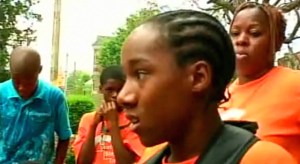
Pool Boots Kids Who Might "Change the Complexion"

More than 60 campers from Northeast Philadelphia were turned away from a private swim club and left to wonder if their race was the reason.

"I heard this lady, she was like, 'Uh, what are all these black kids doing here?' She's like, 'I'm scared they might do something to my child,'" said camper Dymire Baylor.


Jaffa pool restricts entry of Arab residents
Jewish neighborhoods' committees find original, controversial way to deal with violent incidents by local Arab pool goers by restricting their access to facility for one day every fortnight.

---------------------------------

You know, if people put half the effort into solving the problems as they do to blaming each other and writing nasty comments on these articles, we as a human race could be way past this. This is 2009, right?

19 May, 2009

Crosspost: "Ghost Worlds"

A great story about a tour which reveals the lost Palestinian towns of what is now Tel Aviv, and about the other side of Yom Ha'atzmaut/Israeli Independence Day, known to some Arabs as Al Nakba/The Disaster.
In each village we heard the stories of relatives scattered in every direction of the Palestinian Diaspora: Gaza, Amman, Cairo, Baghdad, Nablus, northern Israel, Lebanon, Canada. The randomness of the results of those frantic choices resonated and overlapped in both familiar and unfamiliar ways with the Jewish Diaspora. Each guide told us how their families had come to leave their land, bringing alive the terror and uncertainty of the years 1947 and 1948, proving how academic are the debates about whether the Palestinians of the region were exiled or fled. Life was made unbearable in various ways, and eventually everyone in the region was pushed further and further south, first to Jaffa itself, then maybe to Gaza or the open sea.
Continue reading "Ghost Worlds"...

02 May, 2009

You know you've been in Israel too long when...

I was waiting for the bus the other morning, heading home after a morning meeting. One of the phrases that you really don't want to hear at any time, especially in the morning pre-coffee, is "chefetz chashood" (חפץ חשוד) which means "suspicious object". This is the phrase used when an unaccompanied package or bag is found somewhere. You know how at the airport they always have that obnoxious announcement: "Please don't leave your belongings unattended. Unattended luggage may be confiscated or destroyed". That policy applies for all of Israel.

So I'm standing at the bus stop, street closed, watching the guys in the bomb squad do a controlled explosion of what is likely someone's school bag, and all I can think is, "...I could be home by now eating breakfast by now".

Because apparently possible explosive devices have become pedestrian. Granted, this is the fourth or fifth time this has happened to me. Everyone else seemed to share my disdain for having their time wasted, aside from the tourists who were fervently filming anything they could. The Israelis were not so much amused, though. It's as good an excuse as any for being late for work, I guess.

16 April, 2009

A lyric says a thousand words

Two songs recently have come up on my radar and have proven themselves interesting in regards to the Jewish/Palestinian conflict. Interesting because of the songs themselves, and interesting because the two artists have no connection to Israel or the conflict here. When living here and being inundated with news that has (at best) questionable impartiality, sometimes an outside and unbiased, even if uninformed, voice is a welcome treat. And, in a market where "vacuous" has become the standard, it's also nice to hear something worth listening to.

One is a song from Lily Allen's new album "It's Not Me, It's You", entitled Him. Now, Lily Allen is not a musical genius but her lyrics and social commentary, covering topics from prescription drug abuse to the denigration of women to superficial societal values, are spot on. With this song, she addresses not the Middle East conflict itself but more religious fanaticism and terrorism, and makes us reflect on what God would think of our lives if He was one of us.

Lily Allen - Him (lyrics)

Ever since He can remember
People have died in His good name
Long before that September
Long before hijacking planes
He's lost the will, He can't decide
He doesn't know who's right or wrong
But there's one thing that He's sure of:
This has been going on too long.


Jay Brannan, on the other hand, I know little about. Except having a role in the film Shortbus, his claim to fame seems to be as a solo performer and recording artist. He wrote a song, after having come to Jerusalem to promote Shortbus, about Jerusalem and the conflict that goes on here and, while I take umbrage with the anti-religious tone of his lyrics, I still think he has some valid points about what the holiest place in both Judaism and Christianity has become.

Jay Brannan - Goddamned (lyrics)

I’m marching to Zion
A camera in my hand
I hear people cryin’
Dyin’ for this blood-stained land
The streets of old Jerusalem
Are lined with souvenirs and those buying them
It sounds cold, but I cannot see
How this theme park has shaped history.

09 April, 2009

More BSG stuff

Same instructions as here.
But we have come to a crossroads in our long and painful journey. Cylons and humans have been at war for generations; we know nothing else. And we have been locked in a struggle that has seen both sides suffer unspeakable loss. But with our supplies running low and our options limited, our former enemies may represent our last, perhaps our only, hope.
I've always respected you. But I hate the Cylons. And I can't take orders from a leader who won't fight them.
The second half of Season 4 is all about racism, rival political parities and controversial alliances with old enemies. Sound familiar? BSG doesn't give you answers, but it sure makes for an interesting mental exercise in redemption and forgiveness on both political and individual levels.

04 April, 2009

Israel Eurovision 2009 entry: "Your Eyes"


The song, "Your Eyes", was chosen by the Israeli public after a televised contest. The duo, Achinoam Nini, a Jewish singer, and Mira Awad, a Christian Arab Israeli, will be representing Israel at Eurovision in Moscow in May. It's sung partly in Hebrew, partly in Arabic and partly in English. And, like anything involving Jews and Arabs in Israel, it is not without controversy.

The other songs which were up for contention:
Faith In The Light
Will You Dance With Me?
Second Chance

The Eurovision Song Contest will be held on 16 May this year. No one expect me to do anything that night. I'll finally be in a participating country for Eurovision. I am way too geeked-out and excited by this.

Remember how I was talking before about the contradiction of how Ivri Lider is really popular, despite being a gay man in a highly religious country? Here's another one: in 1998 Dana International, an Israeli transsexual, won Eurovision for Israel with her song "Diva". That was the third time Israel won Eurovision, the other two times being in 1978 and 1979.

19 March, 2009

Review: Waltz With Bashir


The subject of Israel and Lebanon seems to be the new sweetheart of Israeli cinema. Last year the Oscars saw Beaufort, a film about soldiers during the Israeli withdraw from Lebanon in 2000, contending for Best Foreign Language Film. The newer contender for Best Foreign Film is Waltz With Bashir, the story of one man who can't remember his time serving in the IDF during the First Lebanon War. What occurs during the film, which is entirely animated, is the journey from bad dreams which he can't understand to, piece by piece, a recollection of what happened to him during his military service in southern Lebanon. This is not only a film as much as a case study.

From Wikipedia:
In 1982, Ari Folman was a 19-year-old infantry soldier in the Israel Defense Forces. In 2006, he meets with a friend from his army service period, who tells him of the nightmares connected to his experiences from the 1982 Lebanon War. Folman is surprised to find out that he does not remember a thing from the same period. Later that night he has a vision from the night of the Sabra and Shatila massacre, the reality of which he is unable to tell. In his memory, he and his soldier friends are bathing at night by the seaside in Beirut under the light of flares descending over the city. Folman rushes off to meet another friend from his army service, who advises him to discuss it with other people who were in Beirut at the same time in order to understand what happened there and to relive his own memory. The film follows Folman in his conversations with friends, a psychologist and the reporter Ron Ben-Yishai who was in Beirut at the same time.
The entire films is an illustration (literally) of the interviews Folman has with others in an effort to reconstruct and remember what happened to him in Beirut in 1982. The characters in the film are actual people. The interviews are the actual interviews. The stories are all real. While being a treatise on the effects of war and conflict and the history of the Middle East, it's also a documentary on Folman's process in recovering his own memory and dealing with the effects of psychological stress some 25 years on.

It's critics also point out a different use of the film. For all its honesty, the film barely shows any Palestinians or Lebanese despite the war taking place in Beirut. The IDF and Israelis are cleansed of all responsibility for the deaths of Lebanese or Palestinians, despite doing everything but pulling the trigger. Even the medium of the film, animation, prevents the events from being truly real, instead keeping a safe distance between reality and us. The film manages to show a war completely one-sided, one where the victims are the Israelis despite more than 10 times the number of Lebanese civilians dying than Israeli soldiers. It's as if Israeli society as a whole, still reeling from the trauma they helped transpire, is still working towards their own recovery and isn't quite ready to address the full truth.

Politics aside, the film is an intriguing look at an individual's and a society's journey towards psychological wellness, and how people cope with trauma. It's an interesting film because the story is only part of what we're seeing; through interviews and flashbacks and stories, we also see the impact on people of the trauma they experienced, how they cope with it and how one man comes to terms with it. When you apply this to the idea that a majority of people in Israel are conscripted into the military it also can extrapolate to society as a whole, and may help explain why people react to current threats the way they do. Maybe it doesn't, but it at least gives you something to think about.


16 March, 2009

Improving Middle East relations, one Skype-ing at a time

A Skype conversation with someone who randomly messaged me, during the Gaza War

hi
hi
I AHMAD FROM SYRIA
hi Ahmad. I'm Daniel from the US
IAM 24YEARS
i'm almost 28
what do you do in Syria?
I student in medical school
wow! that's great! hard?
thank you
i'm in school to by a psychologist
do you see children in GAGA KILL BY TANK AND F16
only in newspapers
WHY
WATCH TV ALGAZIRA OR ALMNAR
i can't see those where i live
just pictures on the internet
it's TERRIBLE
very, very sad
ARE YOU ISRAEL
yes, i am in Jerusalem
where are you in Syria?
DO YOU LIKE ARAB
yes
i work with many arabs
DO YOU HAVE FRIEND ARAB
yes
ARE YOU SOLIDER NOW
no, i am not a soldier
REALLY I NOW ALL ISRAIL IS IN ARM
there are many soliders, but many many people are not soldiers. they are not fighting.
DID YOU KILL ANY ARABIAN
no, never
and i don't want to
THANK YOU WE CAN TO LIVE TOGETHER
i really really want that
many many people here want that too
WHICH ONE WILL WIN
i hope the war stops and there is peace. then we all win.
THANK YOU
you are very welcome
NICE TO MEET YOU
you too, Ahmad
ARE YOU MARRIDE
no, i am not
are you?
NO IAM LOKINK FOR
well, i'm sure school is keeping you with a lot of work also
DO YOU VISITED ARAB
i visited Jordan and Tunisia
i want to visit Egypt too
have you visited the US?
I invide you to vist syria
thank you
a friend told me that Damascus is very beautiful
i am interested to visit there
yes it is
no IDIDNT AND I DONT WANT VIST US
i invite you to Israel, but it is hard for Arabs to come here sadly
I NOW

02 March, 2009

It's not what you read, it's how you read it

On this bus this morning, while "reading" the paper (I use that term loosely), I came across this fabulous piece of journalism:

The headline reads "Ahmadinejad lives in a movie". The phrase "lives in a movie" in Hebrew means "is delusional" or "is being unrealistic". The story they are referring to is this one:

Art and cinema advisor to President Ahmadinejad says members of Iranian cinema community should not meet with team of visiting Hollywood actors, members of US movie industry before they apologize for films such as '300', 'The Wrestler' which have angered many in Islamic Republic.

See what they did there? Film stars. "Lives in a movie". Cute.

But somehow, in the translation from English to Hebrew, the story changed. It went from Ahmadinejad's advisor to Ahmadinejad himself, and suddenly the concept of apologizing for the negative portray of his people is such an outlandish request as to be seen as insane. Cause, you know, Jews have never criticised others' portrayals of them. There isn't, like, an entire organization dedicated to that very purpose.

It's not that I'm not used to reading biased media; it's a fact of life nowadays. I guess I'm just not used to it being quite so blatant. Even the New Testament Über Alles Network pretends to be objective. I was just talking with my cousin yesterday about how the American media can shape public opinion by what information they do and don't report. I guess we forgot how it's reported influences things too.

Good to know, no matter where you are, some things are constant.

28 February, 2009

One last BSG-related thing

If you substituted "the Cylons" with "Hezbollah" or "Hamas" or "Israel", this could easily be a quote about the Israeli/Palestinian conflict:

"It's naive to think that horrible things that we can't understand have simple explanations, because simple explanations make us feel like we have control and we don't. We know why the Cylons attacked us, and it wasn't any one thing, oh my Gods. We did a thousand things, good and bad, every day for forty years to pave the way for those attacks."

- President Roslin, on the subject of the second Cylon war

26 February, 2009

Living in Other People's Trauma: Observations of an Outsider in Israel

reprinted with permission from the author (that would be me).

One of the things we forget when we’re learning is the learning process itself. When I embarked on my excursion to Israel, I knew that there was much for me to learn; I had little background knowledge about the country or its history or politics, I barely spoke the language and the culture itself was a mystery. Then there was my research project, looking at the effects of trauma on the deaf population, which would entail not only learning yet another language but also an additional culture and community.

When setting off into the unknown it’s always expected that new things will pop up and surprise you; elements of a situation or a people or a culture that you didn’t know existed suddenly present themselves and you have something new to learn. In studying trauma, not just within the deaf population but within the greater Israeli population, I learned something even more: I learned how other people learn.

The history of Israel and the Jewish people is rife with trauma: hundreds of years of persecution culminated in the Holocaust which claimed the lives of approximately 6 million Jews, the violence that came with the founding of the State of Israel, the multiple armed conflicts in the following years and the ensuing intifadas (Palestinian uprisings /lit. “shaking off”), as well as the ongoing threat from hostile countries such as Iran and Syria and the daily rocket-fire it receives from militants in the Gaza Strip. With the continual aggression shown against it diplomatically, militarily and ideologically, how is it that the population is not overwhelmed with trauma-related disorders?

One of the criteria for PTSD and ASD is experiencing an event which is or appears to be greatly threatening to one’s self or to others (American Psychiatric Association, 2000). So what happens when threatening events become more normalized? What happens if a culture incorporates trauma into it, into its holidays and religion, and into its national consciousness? Does it blunt the effects of these threats?

When I came to Israel, I knew next to nothing about Judaism and nothing about Israeli culture. I had of course heard all the warnings given to me by well-meaning and concerned friends and family members before my departure from the States. And while the major news networks seem to have a love affair of showing exploded buses or rocket attacks or Israeli military incursions, I knew there had to be more to the country than just that. However, I also knew that all those other things were also part of Israel, and should not be discounted.

My arrival was easy and relatively painless. I began learning: learning Hebrew and Israeli Sign Language, learning about Israel, learning which buses went downtown and when the grocery stores closed for Shabbat. I learned about the political situation in Israel and the history of the State (both of which changed depending on with whom I talked). I learned what the holidays were and why, I learned about the balance between secular law and Jewish holy law and how the two were intertwined.

But my curiosity extended beyond the current situation. The more I learned about the history of the Jewish people and their need for a Jewish state, the more curious I became about this culture of trauma and its manifestations. The need for me to do active research on the subject, though, was minimal. The incorporation of trauma and the Jewish people’s history of persecution is well-visible within Israeli and Jewish culture in a way that I have not experienced elsewhere.

One of the benefits and complaints I hear about being Jewish is the plethora of holidays that crowd the calendar. While some of these holidays I was familiar with due to their counterparts in Christianity (e.g. Simchat Torah and the Feast of Christ the King) and from a general knowledge of Judaism, others are entirely unique to the Jewish faith or to Israel as a country.

What was interesting to me was the connection to trauma so many of these holidays have. For instance, Tisha B’Av is a fasting holiday that not only commemorates the destruction of the First and Second Jewish Temples, but also other various tragedies that befell the Jewish people (Taanit 4:6). Purim is a celebratory holiday that involves dressing up in costumes to commemorate the almost slaughter of the Jewish people by Haman, an advisor to the then Persian King, but which was averted by Queen Esther (Esther 1-10). Even holidays like Sukkot and Passover, which don’t directly involve trauma, still have ties to the exile and persecution of the Jewish people and others (Leviticus 23:42-43; Deuteronomy 16:12; Exodus 11:1-12:36).

National holidays have similarly strong ties to this history of trauma. Memorial Day, as well as Holocaust Memorial Day, is celebrated with the closing of stores and the sounding of an air raid siren during which everyone comes to a stand-still; cars pull over, people stop in the middle of whatever they’re doing, everyone stands at attention for two minutes and remembers the people who have died. This is not the American-style holiday with parades and “50% off!!” sales; this is a day purely of solemn remembrance and memorial.

Other non-religious and non-historical factors play a central role in Jewish-Israeli society as well. Military service is required of all Jewish-Israelis beginning at age 18; three years for males and two years for females. For many men this involves service in a combat unit and, given the usage of military force in the West Bank and Gaza, active military duties. I have friends who did their military service in Hebron (a flash-point of settler/Palestinian violence) or who assisted with Israel’s withdraw from the Gaza, and their experiences are by no means rarities.

There are even high school programs that allow the students to volunteer with Magen David Adom (the Israeli Red Cross) and assist paramedics and other professionals. While these under-18s are barred from responding to mass casualty incidents, they still regularly respond to car accidents and various other types of trauma which high-schoolers in other countries may not be. There are also programs for high school students to be involved in the Israeli Defence Force (IDF) before starting their required service. While the point isn’t to purposefully expose these students to trauma, there is also less shying away from it.

And this isn’t the only exposure to violence Israelis are receiving. The First and Second Intifada’s involved suicide-bombings on public buses, in nightclubs, and in crowded public places. Continued rocket fire into Israeli towns such as Sderot and Ashkelon affects not only the population of those areas but also feature prominently in the daily news media. These, combined with threats of violence from militant groups like Hamas and Hezbollah as well as nuclear threats from Iran, create an underlying feeling of threat of which one is constantly aware.

All this is on top of the fall-out from Israel’s six armed conflicts, incidents like the killing of Israelis at the Munich Olympics in 1972, SCUD missile bombing during the Gulf War and the effects of intergenerational trauma from the Jews who came en mass to Israel during or following the Holocaust (Lev-Weisel, 2007; Kellerman, 2001). This Jewish trauma has become part of some people’s identity, an inescapable part of their past and present as Jews and as people of Israel.

So what are the effects of this trauma, both historical and on-going? In Israel the rate of PTSD is approximately 6% for the Jewish population (Hobfoll et al., 2008). However, the trauma of immigration to Israel has proven stressful for multiple groups (e.g. Ritsner, 1997; Ritsner, 1996) and presents itself differently than traditional PTSD symptoms (Grisaru, 2003; Daie, 1994; Schreiber, 1995). In a country that has seen over 3 million immigrants in the past 90 years (Central Bureau of Statistics, 2007a) this is a sizeable number of people who may have trauma-related disorders but are yet undiagnosed.

The Israeli-Arab population rate of trauma is much higher, about three-times the rate of the Jewish Israeli community (Hobfoll et al., 2008; Gelkopf, 2008). I don't discuss the Israeli-Arab community in this article not to minimize their experiences, but simply because of my own lack of knowledge about this community and their experiences of trauma. However this population is still highly relevant to any discussion of trauma in Israel, as they compose approximately 20% of the Israeli population (Central Bureau of Statistics, 2007b).

The overall response I get in regards to the volatility here is usually the same: a shrug of the shoulders and “אין מה לעשות" (ein mah lah-ah-soht/“nothing to be done”). I think it’s best summed up in the over-arching theme of Jewish holidays, as described to me by a friend: “they tried to kill us, we survived, let’s eat”. In other words: regardless of what happens, life goes on and we’ll get used to it. Whether it’s a faith in God that comforts them or simply the acceptance of the unpredictable nature of life here, it seems to be an effective strategy (Somer et al., 2005).

My learning about trauma in Israel, which I originally thought would be mostly academic, has turned out to be completely the opposite. By living here among Israelis and within the Jewish-Israeli culture, I’ve learned how people deal with trauma on a daily basis. These are obviously not the same traumas as experienced by people in places such as Baghdad or Darfur. But the daily, mini-traumas of Israeli life are constant: walking onto a public bus, passing a restaurant which had been bombed, hearing a sudden loud noise outside. These I’ve learned to deal with this in a very Israeli way, with “אין מה לעשות” and a quiet prayer.


References

American Psychiatric Association. (2000). Diagnostic and statistical manual of mental disorders, fourth edition, text revision. Arlington, VA: American Psychiatric Association.

Central Bureau of Statistics, (2007a). Immigrants, by period of immigration, country of birth and last country of residence. Retrieved from http://www.cbs.gov.il/shnaton58/download/st04_04.xls on 9 December 2008.

Central Bureau of Statistics, (2007b). Demographic situation in Israel. Retrieved from http://www.cbs.gov.il/reader/newhodaot/hodaa_template.html?hodaa=200801252 on 9 December 2008.

Daie, N., & Witztum, E. (1994). A case of posttraumatic stress disorder masked by pseudoseizures in a jewish iranian immigrant in israel. Journal of Nervous and Mental Disease, 182(4), 244-245.

Gelkopf, M., Solomon, Z., Berger, R., & Bleich, A. (2008). The mental health impact of terrorism in Israel: A repeat cross-sectional study of Arabs and Jews. Acta Psychiatrica Scandinavica, 117(5), 369-380.

Grisaru, N., Irwin, M., & Kaplan, Z. (2003). Acute psychotic episodes as a reaction to severe trauma in a population of Ethiopian immigrants to Israel. Stress and Health, 19(4), 241-247.

Hobfoll, S. E., Canetti-Nisim, D., Johnson, R. J., Palmieri, P. A., Varley, J. D., & Galea, S. (2008). The association of exposure, risk, and resiliency factors with PTSD among Jews and Arabs exposed to repeated acts of terrorism in Israel. Journal of Traumatic Stress, 21(1), 9-21.

Kellermann, N. P. F. (2001). Transmission of holocaust trauma -- an integrative view. Psychiatry, 64(3), 256-267.

Lev-Wiesel, R. (2007). Intergenerational transmission of trauma across three generations: A preliminary study. Qualitative Social Work, 6(1), 75-94.

Ritsner, M., Ponizovsky, A., Chemelevsky, M., Zetser, F., Durst, R., & Ginath, Y. (1996). Effects of immigration on the mentally ill -- does it produce psychological distress? Comprehensive Psychiatry, 37(1), 17-22.

Ritsner, M., Ponizovsky, A., & Ginath, Y. (1997). Changing patterns of distress during the adjustment of recent immigrants: A 1-year follow-up study. Acta Psychiatrica Scandinavica, 95(6), 494-499.

Schreiber, S. (1995). Migration, traumatic bereavement and transcultural aspects of psychological healing: Loss and grief of a refugee woman from Begameder County in Ethiopia. British Journal of Medical Psychology, 68(2), 135-142.

Somer, E., Ruvio, A., Soref, E. & Sever, I. (2005). Terrorism, distress and coping: High versus low impact regions and direct versus indirect civilian exposure. Anxiety, Stress & Coping, 18(3), 165-182.

Teichman, E., Zafrir, H. (2003). Images Held by Jewish and Arab Children in Israel of People Representing Their Own and the Other Group. Journal of Cross-Cultural Psychology, 34(6), 658-676.
28 January, 2009

When sci-fi meets reality: BSG and the Middle East

The end of one of television's best series is nigh; in fact the latter half of the final season started less than two weeks ago. In order to be fully caught up, I decided to rewatch the first three seasons in order to be ready for the fourth and final one. What has repeatedly struck me, though, is how the events of a program on the Sci-Fi Channel can have so much relevance to actual current affairs.

The premise of Battlestar Galactica (BSG) is that, in the future, most of the human race is annihilated after a nuclear attack. The remainders of humanity are fleeing a human-made robot race called the Cylons who want to eliminate the few humans they missed. The series portrays the humans struggle to regroup and find the mythical Earth, where they hope to resettle and rebuild civilization. Now, I know it takes place on spaceships and is on the Sci-Fi Channel but that is about as sci-fi as it gets. What it is actually is an exercise on humanity, desperation and redemption.

I'm not going to go into the details of all the similarities because it would take a bloody long time and because, without having seen the series, I feel it would be hard to see the connections without my writing a full-on essay about it (though I might just do that one day). However, if we look at a list of BSG's over-arching themes, we can see a striking resemblance to the current situation in Israel and Gaza/the West Bank:
  • morality of war, and the after-effects of war
  • the creation of extremists/extremism
  • recovery from disaster/attack
  • PTSD/recovery from trauma
  • racism
  • establishment of government/establishment of a state
  • terrorism
  • genocide
  • occupation and oppression
  • inter-religious conflict, and religion vs. secularism
  • religious extremism
  • the right of humanity, and dehumanization others
  • peace vs. war as a solution to conflict
  • morality vs. survival in a time of war
  • torture and detention
  • vengeance and reconciliation
Now, I'm not a huge television watcher so perhaps these themes have appeared on other shows as well, but I think two things make BSG a very interesting juxtaposition of the Israeli/Palestinian conflict. One is the specific combination of these themes around the premise of a massacred, displaced people looking to establish a home; and the second is the modality of a television series, which allows these themes to be explored, intertwined, developed, re-approached and analyzed over a longer period of time than, say, a film, in the same way that the 60 years of conflict in Israel and the Territories have seen these themes resurface in different ways over and over again.

Through BSG, we get a more detached way of looking at the elements of the situation in the Middle East, and are allowed to see the same concepts we're living with in a starkly different context. Because of this, we are better able to better understand them and therefore better understand what's happening in reality. It also gives us a different perspective on these issues, one to which we have no personal connection and therefore are able to view more objectively. And if you think I'm just a crazy sci-fi fanboy, might I direct you to IO9's article on BSG and the Obama administration (warning: spoilers abound).

I'm quite sure that the show was never intended to be any kind of allegory for the Israeli/Palestinian conflict, and some of BSG's prominent themes could probably also be applied to other events as well: the Rwandan and Darfurian genocides, the fall of the Soviet Union, the situations in Tibet and Taiwan regarding China, the end of apartheid in South Africa, and many other situations. Having not studied any of those events in great detail, I cannot say if they are a better or worse fit.

But as someone living in the middle of the Israeli/Palestinian conflict I can say that there is definitely more than a tenuous connection to the current situation and that of the struggle between the Colonial Fleet and the Cylons (and I'm not the only one). In that light, BSG should be watched as a manifestation of these same critical issues and as a treatise on how humans deal with extremes: physical, political, religious and moral, among others.

But even aside from all that: it's just damn good television.

16 January, 2009

"There's place for us to build a paradise!"

Interviewer: Do you approve of what your government is doing to try and stop those attacks on Ashkelon?

Ruth: Look, look. "Approve"? We had no choice, my dear! We in Ashkelon have been having these air raids over two weeks; just two weeks. But in Sderot they've been having them for eight years. It's impossible! You can't continue your life like that. All the schools in Ashkelon are closed, kindergartens are closed, businesses are closed, all cultural activities and sport activities are disrupted. So, I mean, how much can you take? How much can you take?!

I am certainly not for casualties, you know, but they put the children in places...if it's a two-floor house: on the ground floor are the armed men who are sending the rockets, and on the second floor are the families, so how can...or in the inside rooms. It's impossible!

Even if Hamas is doing that, do you think the Israeli government, in the long term, has to find another way because for whatever reason it can't keep...

Of course! There is no doubt about it, my dear! We are the first...I want them as my neighbours. They are my neighbours! I want them to build a state of their own. I'm all for it. But I don't want to be thrown into the sea because I'm not leaving! This is my homeland.

You know I'm British; I have British nationality as well, because my mother was born in England; my father was British. And I have an Israeli nationality. But this is my homeland, and I want and I intend and we all intend to stay here.

Let them build their own state, by all means! Put all the resources and energy into building all what is necessary. Education, health, name it! They've got so much money. Not in destruction! These people, the Hamas people, terrorize their own people, let alone us.

What do you think, Ruth, of the worldwide protests against the attacks on Gaza?

Well, because people don't know the situation here. You have to be on the spot to see what we are undergoing. I have an English journalist staying now with me overnight from the Daily Telegraph. She's been traveling around Sderot. If you want, you can have a word with her and ask what her impressions are.

It's OK. We'll stick with you, Ruth.

I'm joking, but I'm saying one has to be on the spot. You can't condemn us without seeing what our settlements and towns have been undergoing for the last eight years. And what about the suicide bombs before that?

Can I ask you, finally, Ruth: are you afraid, living in Ashkelon?

Am I afraid? No, certainly! I was in England all throughout the blitz! I'm not. No, I'm not afraid at all. It's not pleasant. It's very unpleasant. Understatement, right? I hate the sirens, and then you have to wait to hear the fall, and then you don't know who was hurt. You know? Whether a house was hurt, or people were hurt.

No, and I was born in this part of the world. I have a Palestinian birth certificate, so I feel a great affinity with my friends across the borders: my brothers, my cousins. We have a similar language and a similar mentality, and there's place for us to build a paradise!


-excerpts from an interview with Ruth Yashin, 86-year-old resident of Ashkelon, on the BBC (13/01/2009)

14 January, 2009

Well, that was...interesting.

The air raid sirens sounded about an hour ago here in Jerusalem. False alarm, thankfully. The system was only supposed to alert Ashkelon, Ashdod, Yavne, and Be'er Sheva (where the rocket actually hit). Apparently Jerusalem was included because Yavne is between Gaza and Jerusalem, so the projection of the rocket was correct even though the range was too short.

Well, at least now I know what the Code Red siren sounds like...

02 January, 2009

A snippet of Israeli cinema

Aviva, My Love (2006)
Aviva, a hard-working hotel cook in the small northern Israeli town of Tiberias, is on the brink of finally fulfilling her lifelong dream. For years she kept her remarkable writing abilities under wraps, until her sister, Anita, introduces her to Oded, an accomplished novelist.
Trailer
IMDB


Walk On Water (2004)
Eyal, an Israeli Mossad agent, is given the mission to track down and kill the very old Alfred Himmelman, an ex-Nazi officer, who might still be alive. Pretending to be a tour guide he befriends Himmelman's grandson Axel, who is in Israel visiting his sister Pia.
Trailer
IMDB


Beaufort (2007)
The chronicles a group of soldiers positioned at the 12th century Crusader stronghold of Beaufort Castle: their daily routine, their feelings and their fears, and explores their moral dilemmas in the days preceding the withdrawal and end of the 18-year South Lebanon conflict.
Trailer
IMDB


Bonjour Monsieur Shlomi (2003)
16 year old Shlomi lives with his restless mother, his soldier brother and their ill grandfather. One day, the school's principal finds out Shlomi is actually a genius and tries to get him into a more suitable curriculum. However, Shlomi is more interested in taking care of his family and his new love interest, the beautiful girl next door.
Preview
IMDB


Late Summer Blues (1987)
Four Israeli teens spend a final summer of freedom before they are drafted into the Army during the 1970 Suez War. They discuss their futures, politics, and the occupation of the West Bank in the volatile region. The quartet goes from a festive high school graduation ceremony to anxiety when of their classmates is the first to be killed in conflict.

Preview
IMDB


Waltz With Bashir (2008)
One night at a bar, an old friend tells director Ari about a recurring nightmare in which he is chased by 26 vicious dogs. The two men conclude that there's a connection to their Israeli Army mission in the first Lebanon War of the early eighties. Ari is surprised that he can't remember a thing anymore about that period of his life. He needs to discover the truth about that time and about himself. As Ari delves deeper and deeper into the mystery, his memory begins to creep up in surreal images.
Trailer
IMDB


Other films...
Late Marriage (2001)
Broken Wings (2002)
Yossi & Jagger (2002)
Paradise Now (2005)
The Syrian Bride (2004)
Someone To Run With (2006)

11 December, 2008

Edits from an article I'm writing...

"Anecdotally, people have told me that this trauma-identity is used to solidify the Jewish community outside of Israel, both for security reasons and to strengthen Jewish identity. Of the 1400 religion-based hate crimes in the United States which were reported to the FBI in 2007, 969 were anti-Jewish, (Federal Bureau of Investigation, 2007), making an effective argument for safety concerns (though the circle-the-wagons approach may be both counter-productive and ineffective in the long-term (Somer et al., 2008)). Intermarriage and assimilation increases are also borne out in various surveys (e.g. National Jewish Population Survey 2000-01, 2001), showing greater intermarriage and fewer children being raised Jewish in these marriages when compared to families with two Jewish parents."


"There are even high school programs that allow the students to volunteer with Magen David Adom (the Israeli Red Cross) and work on ambulances. While these under-18s are barred from responding to mass casualty incidents, they still are regular witnesses to car accidents and various other types of trauma that high schoolers in other countries may not be. While the point isn’t to purposefully expose these students to trauma, there is also less shying away from it."


"However, this seems to be more a phenomena of the diaspora than of Israel. My own experiences with discrimination as a non-Jew have come solely from non-Israeli-borne Jews, all of whom were of Ashkenazi/European descent. I don’t wonder if my blatant German-Catholic heritage (I don’t appear Jewish at all) doesn’t play some part in that. This is aside from the Israeli governmental favouring of Jews over non-Jews, which not necessarily discrimination but is clearly unequal."


"Yet this feeling also becomes somewhat normalized. As a researcher who studies trauma and emergency response, I was interested in learning how Israel coped with the attacks on it. I learned that every house has a reinforced safe-room and that bomb shelters are a part of every public building; I learned that security guards check your bag at the entrance to every mall, bus station, and most restaurants; I got used to seeing soldiers with guns on public buses. The necessity of adaptation required that you adjusted your thinking to the situation."


Federal Bureau of Investigation (2007). Hate crime statistics, Table 1. Retrieved from http://www.fbi.gov/ucr/hc2007/table_01.htm on 8 December, 2008.

Somer, E., Maguen, S., Moin, V., Boehm, A., Metzler, T. J., & Litz, B. T. (2008). The effects of perceived community cohesion on stress symptoms following a terrorist attack. Journal of Psychological Trauma, 7(2), 73-90.

19 November, 2008

Behind enemy lines?

One of the benefits of being a Fulbrighter is the perks. Perks like invitations to the Ambassador's residence and getting flown to African countries for conferences. Say, for instance, Tunisia.

In an effort to share our work and experiences with each other, Fulbright (or IIE, or someone) decided to have two regional conferences during April: one in Tunis, Tunisia; and the other in Amman, Jordan. I was chosen for the Tunis conference so, along with three other of my fellow Israeli Fulbrighters, we packed our bags and headed to Africa. The purpose of the conference was to share our research topics and progress with other Fulbrighters from our region, MENA (Middle East/Northern Africa), and also to talk about our host countries and our experiences living there.

Now, if you took a second to think about what constitutes the Middle East and Northern Africa, you'll realize that it means all the Arab countries plus Israel. There was, at least on my part, a trepedation walking into a group of "Arab" students. Everyone knows that Israel doesn't have the best reputation with most Arab countries, and I wasn't sure what that meant to the other Fulbrighters and how that influnced their perspectives. Had they adopted the same opinions? What did they think about us having chosen Israel to study in? And, in the bigger picture, what did it mean to be going from Israeli to an Arab country? Was this something we could talk about, or did we just say we were Americans and leave out "via Israel"?

Our arrival, via Italy as there are no direct flights from Israel to most Arab countries, was mostly uneventful. Because of he flights available, we arrived in Tunis a two days before our conference started, which allowed us time to explore Tunis. Our conference was held in a hotel in Sidi Bou Said, a small town north of the capital, Tunis. It's primarily touristy, but a lovely coastal town full of cafes and shops.

The conference was such that we were all broken into various panels centered around a topic: mine, for instance was "Women's Issues and Public Health" (I study trauma/disaster response). Everyone gave a briefy explanation of their project and time in their host country, and then the floor was opened to questions. The breadth of topics was a little astounding, ranging from chemical engineering for low-cost housing in Morocco to a theatre company in Syria. We also had a trip to Carthage to see the ruins there, and saw the largest collection of mosaics in the world at a museum (the name of which I've forgotten).

While the presentations were interesting, equally beneficial was talking with the other Fulbrighters during our down-time. While we were all associated with our host countries, we were also all Americans so we had plenty to talk about. The Israeli/Arab differences only popped up a few time, mainly in the use of slang Arab phrases during presentations that some of us didn't understand.

Not to say the topic of the Israeli/Palestinian conflict didn't come up; in fact, one of the other Fulbrighters was born in Palestine. What was nice, though, was to discuss the situation with people not directly ivolved in it. I feel like it allowed for a more neutral discussion of things, which is hard to in Israel when all of your friends are either Jews or Arabs. It was also good to learn more about how the Arabs see the conflict and what their feelings are towards it and why, and also to explain the Israeli side of things. No one was trying to justify things, but with the experience of living in the countries involved it allowed for a more rich discussion of the whole situation.

There was some button-pushing, though. I somehow doubt the guy wearing a "Save Palestine" shirt just happened to have packed that in his suitcase. But he didn't disrupt our conversation on the topic (though he tried), so...מה לעשות?

It was interesting to hear what is reported in the Arab media, though, compared to what shows up in the Israeli news. More than a few times the story the Fulbrighters outside of Israel heard was in stark contradiction to what the Israeli media reported, and none of us could say for sure which was more accurate.

The conference was topped off with a reception at the US Ambassador's residence for all of us. The residence is located on the outskirts of Sidi Bou Said, and has an amazing view of the Bay of Tunis.

Afterwards, myself and two of the other Israeli Fulbrighters (Deb and Emily), trekked through Tunisia for another four days. We took louages (like group vans/מוניות שרות) to Kairouan (the fourth holiest city in Islam) and then on to Houmt-Souk, located on the island of Djerba in southern Tunisia. After two days in Houmt-Souk, we returned to Tunis via a train up the coast to fly back to Israel.

I won't bore you with all the gritty details, except to say that Tunisia is beautiful and we had an absolutely lovely time. We even ran into some Jewish, Hebrew-speaking Tunisians in Houmt-Souk, which is known for it's large Jewish population. They take pride in that there's no animosity between the Arab and Jewish communities in Djerba; the oldest synagogue in Tunisia is on Djerba, though we didn't get to see it. While we didn't directly address people's feelings on the Israeli/Palestinian conflict, no one seemed too phased by us having come from Israel. We're weren't advertising that fact either, though, so who knows for sure?

Two other fun things: the blue and white motif that is throughout Tunisia is apparently a law, or at least such a strong custom that no one dares to defy. And second: when we were in Gabes waiting to swith louages, I ducked into a cafe to buy a Coke and saw La Femme Nikita on TV! As I've mentioned before this show rates quite high on my favorites list, so I was very pleased to catch a glimpse of Nikita with Arabic subtitles.

The entire week, communication-wise, was kind of traumatic for me because I was dependant on Deb and Emily the whole time. The official language is Arabic and most people also speak French (a remnant of when Tunis was a French colony) but next to no one outside of Tunis spoke English, and since I don't speak Arabic and my French is practically non-existant...I'm pretty sure my broken Hebrew with the jewelry shop owner was my only direct conversation with a Tunisian for most of the trip. Weird.

Anyhow, check out the photo gallery for pictures from the trip. And Tunisia has the largest number of spas in the world (after France) so if you're ever looking for a relaxing get-away to the Mediterranian coast, I have a recommendation for you.

04 July, 2008

Remembering and forgetting

There are so many holidays in Israel, between the government ones and the religious ones, that I have problems keeping track of them. I'm not kidding. More than once I've walked out the door with the intent of catching a bus, only to find it's one holiday or another and everything is shut for the day. I think I could make a nice sum of money developing a Goy Alert service, in which all of us unfamiliar with Jewish and Isareli holidays would be notified a week in advance so as not to have our plans completely derailed by a surprise holiday. But I digress...

Aside from the religious holidays, the two main holidays people always talk about experiencing are Memorial Day (יום הזיכרון) and Independence Day (יום העצמות). Given the history of Israel, you can imagine the significance of these two days to the Jewish and Israeli communities. They are also, thankfully and purposefully, placed one after the other; Memorial Day is immediately followed by Independence Day, a day of solemness and reflection followed by a day of celebration and partying.


As with all other Jewish holidays, the day begins as sundown. Memorial Day in Israel is nothing like that in the US. Instead of sales and picnics and parades, most shops and stores are shut and no one works in the evening. At 8pm, the air raid sirens blow and the entire country comes to a halt: people stop walking, cars pull over to the side of the road and people get out and stand. No one moves, no one talks. For a full minute, you do nothing but remember the people who have died for Israel to be where it is now. You remember the current conflict in which people are dying. You remember the surrounding countries which constantly threaten the people and statehood of Israel. You remember that no one here can take anything for granted, not even daily life.

A large ceremony was held in Kikar Rabin in downtown Tel Aviv. With performances by many famous artists and speeches by, among others, the Mayor of Tel Aviv and various military personnel, the night still has a very somber feel. Between the songs and speeches are video interviews with parents or spouses or children who have lost someone in one of Israel's wars. No one claps for the performers. No one cheers. 10,000 standing there, all focusing on the people who aren't there.

The following day is still in the same somber tone. Again, at 11am, the sirens sound and the country comes to a stand-still. Though the rest of the day carries on as normal, there is a constant cloud over the collective head of Israel. Even as someone who isn't Israeli and isn't Jewish, this morose feeling was inescapable. It probably didn't help that I watched "Beaufort", which is a fantastic movie about the experiences of Israeli soldiers but isn't the most uplifting piece of cinema. I still highly recommend it, though.

At sundown, which is the end of one day and the start of the next in the Jewish calendar, Independence Day begins. In an effort to throw off the melancholy of the previous day, Independence Day is celebrated much like in the United States: with parties, gatherings of friends and family, and revelry in all that is good about Israel. Israeli pride is out in full force, and the streets are filled with people out to have a good time.

The next day, which is still a holiday and on which no one goes to work, is celebrated with street fairs and ice cream and time at the beach. After such a melancholy day, the celebrations and parties are as much for Israel as they are for her people. The focus changes from what has been lost to what has been gained and, while the cost is never entirely forgotten, the sadness of the preceding day is put aside to focus on the achievements of Israel and her perpetuation into the future.

It's an odd feeling celebrating national holidays in a country of which one isn't a citizen. You celebrate a day which has no direct connection to your own up bringing or background. As a non-Israeli and a non-Jew, this is especially felt in Israel. My non-Israeli Jewish friends still have a connection to Israel and its existence; what happens to Israel, what happens to the Jews here, indirectly (and directly) happens to Jews throughout the world. National holidays here aren't just for Israelis, but for Jews everywhere.

And then there's me, standing amidst 10,000 people at a Memorial Day ceremony for a country and a struggle that isn't mine. It wasn't until the middle of that evening that I realized something: this is about me. It's about me because it's about people I care for. It's not about my connection to Israel or the Jewish people as a whole, it's about my connection to the individuals who matter to me. Without realizing it, I had become a kind of de facto Israeli. Politics and principles aside, Israeli matters to me because it matters to them.

Suddenly I had an idea of what they must feel and what their ties to this country are. The day was no longer about identity or religion or citizenship, it was about what my friends had lost to gain what they have. Through them, Israel had become a part of me and these holidays, their holidays, were also mine.

And after these highs and lows, everyday life, such as it is, resumed for another year.