Showing posts with label Jews. Show all posts

09 July, 2009

Next it'll be separate water fountains...

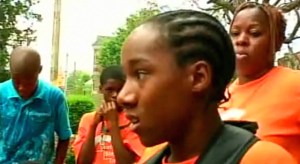
Pool Boots Kids Who Might "Change the Complexion"

More than 60 campers from Northeast Philadelphia were turned away from a private swim club and left to wonder if their race was the reason.

"I heard this lady, she was like, 'Uh, what are all these black kids doing here?' She's like, 'I'm scared they might do something to my child,'" said camper Dymire Baylor.


Jaffa pool restricts entry of Arab residents
Jewish neighborhoods' committees find original, controversial way to deal with violent incidents by local Arab pool goers by restricting their access to facility for one day every fortnight.

---------------------------------

You know, if people put half the effort into solving the problems as they do to blaming each other and writing nasty comments on these articles, we as a human race could be way past this. This is 2009, right?

05 July, 2009

A picture is worth a thousand words...

There's a big brouhaha in Jerusalem right now over a parking lot that the city authorized to be open on Shabbot. The ultra-Orthodox have their knickers in a twist because it's another business open on Shabbot. The seculars are up-in-arms about the ultra-Orthodox being up-in-arms because there is a huge parking problem in Jerusalem, especially on the weekends (it goes hand-in-hand with the huge housing problem in Jerusalem, but I digress).

Yesterday was the second (or third?) Shabbot wherein a large group of ultra-Orthodox protesters got together and made a scene/rioted/set things on fire/attacked police. And, while I respect them for standing up for what they believe in, I'm more annoyed by their complete disregard for the desires or viewpoints of everyone else. Them and the settlers. But I digress again...

Anyway, this picture was from last weekend and it just made me laugh. If they're going to be obnoxious and make my life difficult, the least they can do is provide more pictures like this:


Leaving Israel in less than two weeks. Still getting things in order, finishing up projects, starting up other projects and generally pretending that my leaving isn't really happening. Hurray for the power of denial!

31 March, 2009

Imagine if they'd asked about Islam...

A few weeks ago a study was conducted into Israeli Jews' attitudes towards Christians and Christianity. It all stemmed from the controversial rehabilitation by Pope Benedict of a bishop denied the extent of Jews killed in the Holocaust. What was fascinating was how the opinions of people fell completely along secular/religious lines on almost every issue.

I was going to make a nice table with the results, but since Blogspot apparently doesn't like the HTML coding for tables I tried using lists instead which also was a Blogspot!fail. So I'm just typing out a sample of the questions and you can go read the rest for yourself if you're interested.

All percentages are people who agreed with the statement.


- Christianity should be taught in schools.Secular: 68%
Religious: 27%

- Christians should be allowed freedom of religious exercise in Israel.Secular: 71%
Religious: 32%

- The sight of a person wearing a cross disturbs me.Secular: 9%
Religious: 60%

- All or most Christians are missionaries towards Jews.Secular: 18%
Religious: 43%

Now imagine you're the government and you have to represent the interests all of all these people at once. Go!

25 March, 2009

The high ranking homo in the Holy Land

One of the interesting things about Israel is the amazing diversity of people which exists here. Even though the country is 80% Jewish, there is no prototypical "Israeli". There are immigrants from all over the world, including from Beta Israel in Africa, all of who have come here for vastly different reasons: financial stability, fleeing racial persecution, freedom of religious worship, whim, or Zionism to name a few.

Outside of the Jewish/Arab conflict, this creates huge amounts of conflict just within the Jewish community. There are all kinds of power struggles just to get through daily life, as ideology of Zionist immigrants clashes with the "I just want to live my life"-attitude of Israeli-born seculars and the Orthodoxy is passing laws based on Halacha that affect everyone, Jews, Muslims and Christians alike. Then add in Ashkenazi vs Mizrachi/Sephardi, sabras vs olim, or settlers vs. everyone else, just to name a few, and suddenly the whole Arab/Jewish conflict seems like a small squabble (albeit with bombs).

One of the biggest examples of this odd mixture of contradiction is Ivri Lider, one of Israel's most popular musicians. Openly gay, Lider has been a hit on the charts for the past 10 years, even being voted as the number one male performer of 2000. In a Middle Eastern country dominated by religious law and conflict between two fundamentalist religions, somehow one of their biggest stars is an openly gay man who not only writes and performs his own music but also has written soundtracks for some hugely popular Israeli films which themselves feature significant gay themes, itself an interesting cultural clash. Keep in mind that homosexuality in any of the countries bordering Israel will get you jailed at best and killed at worst; yet another opposite.

But, like any good contradiction, Lider is not without his own. He's no kind of spokesman for gay pride. He opposes the annual March for Pride and Tolerance in Jerusalem and doesn't advocate for gay rights or societal acceptance, despite being very open about his own life and sexuality. He's hugely popular with the army which, though gays can serve openly, is still a bastion of Eastern machismo culture.

Now maybe this isn't so unexpected. Religious people don't listen to popular music and the Muslim population doesn't listen to Hebrew radio, leaving the live-and-let-live secular population in control of popular culture. Still, even if that's true, it means the face of pop culture in Israel is different than many of the people who live there.

What an interesting contradiction...


Below, the two singles off Lider's new album "The Steady Rhythm of Body Movements":

עלוף העולם The Champion of the World


רק תבקש Just Ask


And just for fun, his cover of Katie Perry's "I Kissed a Girl" (which they played on the radio incessantly for weeks):

12 March, 2009

Lost in the shuffle...

An entry I wrote in August that got stuck in my drafts folder and forgotten about. I'm publishing it now, as is.

from 5 August, 2008:

As you've noticed, I usually don't write about things that happen to me until well after they've occurred. Part of this is procrastination, part of it is the time to write it well, and part of it is remember that I even have this blog in the first place. Well, I'm going to switch gears today and write something off the cuff because I'm having a bad day, and it's my blog, and I can pretty much do whatever I bloody well please.

About a week ago I sent out an e-mail on a listserv called Janglo, which caters primarily to the English-speaking community in Jerusalem (which is huge). I was asking about anyone who had gone through the process of applying for a work permit (Jews get an automatic 6 month work permit; the rest of us have to submit a pile of paperwork that requires most of the average lifetime to collect). One guy responded with this list of materials he had to submit for his visa:

- Four letters of recommendation and one letter from my potential Israeli employer stating the following:
1)I am a specialist in my field.
2) My skill sets are unique and required many years of training to acquire.
3) There is no person in Israel with similar skill sets, nor was there likely to be in the foreseeable future.
4) That my specialty was needed to advance the field in Israel, and that the field would suffer without them, as a result.

They also require, at a minimum:
- copies of my university degrees (not transcripts, official copies of the degrees themselves)
- a criminal background check
- photocopies of my passport and driver's license
- bank statements
- various other supporting documents which they decide on as they feel that day

After all this, it took eight months for them to decide whether or not to issue him a work permit. This in and of itself doesn't bother me; if I was applying to work in any country in which I'm not a citizen, I would probably have to submit a very similar set of materials. My issue is that, if I were Jewish, this is what I'd have to submit:

- letter from potential employer saying they're willing to hire me
- letter from my Rabbi stating that I'm Jewish

That's it. You can get it the same day you apply for it.

This isn't meant to sound anti-Israel. I think Israel is great. The more I learn about the history of the Jewish people, the stronger my convictions that Israel is a vitally important entity for Jews worldwide. I'm fucking thrilled that people I know and love have a place where they can live free of persecution and discrimination based on their religion/nationality.

A number of people also responded with "If you're Jewish, what's the problem?" and I explained that I'm not Jewish and why I'm here and want to stay. Here's one of the responses I got:
Daniel,

you sound like a nice person, with a good set of values. I am sure there are many organizations for the deaf in non-Jewish countries that need a talented, compassionate person like yourself. Here, however, it is only the "State of Israel" because it is the "Land of Israel", as I am sure you are aware of. So, let a talented, compassionate, educated Jew help his/her own here, and go and spread the good stuff you have in surroundings that are for you. I am sure you are aware of the Noachide Laws. They are so important that they are in the Torah. If you can help yourself and other non-Jews to arrive at these values - you will have done work of the righteous, to be sure.

I wish you all the best, and may Hashem take care of you.

A number of things about these kind of responses bother me.
- if there was a "talented, compassionate, educated Jew" who had my skills, I wouldn't have been invited and funded by the Israeli government to come here with my skills.
- the Deaf community here needs my help, and this woman thinks that I should let them flounder simply because I'm not Jewish. In other words, this woman is wishing ill on her fellow Jews/Israelis because I'm not Jewish.
- the way she explains how Israel is the Jewish state and that it's for Jews, as if I haven't been hit over the head with that daily for the past twelve months.
- after telling me, essentially, to "fuck off", she has the gall to wish blessings on me. "Get out, and God bless".

What I don't get is this: I want to stay and work with Israelis. Deaf Israelis. Deaf Israelis who don't have equal rights, who don't have equal accessibility, who don't have someone to advocate for them, who need someone to fight for them when society at large ignores them and what they need. I want to help Israel and Israelis, and people want me to leave. People are willing to let their own people suffer to get me out of the country.

I mean, last time I checked Israel was surrounded by countries that hate it, expanded itself in a way that most governments' think is illegal, and is being threatened regularly by Iran with nuclear annihilation. And you're going to be choosy about who comes to your aid? To me, that's dumb.

Now, maybe this has been happening for centuries and I just haven't felt it before because I'm a white, middle-class male. Maybe this is some kind of karmic retribution for the Inquisition, or something. I don't know. But it certainly doesn't make any kind of sense to me.

Israel is certainly not the most popular country in the world, and I've been doing nothing but talking its praises while I've been here. As one of my fellow MDA volunteers said, "you're the best PR we've got". I'm a non-Jew talking about how great I think Israel is, trying to change peoples' perceptions to something that's not based on CNN's coverage of the Gaza Strip.

So tell me, people: am I right? Wrong? Missing the point of Israel? Overly sensitive?

Now if you'll excuse me, my bacon cheeseburger is ready.

26 February, 2009

Living in Other People's Trauma: Observations of an Outsider in Israel

reprinted with permission from the author (that would be me).

One of the things we forget when we’re learning is the learning process itself. When I embarked on my excursion to Israel, I knew that there was much for me to learn; I had little background knowledge about the country or its history or politics, I barely spoke the language and the culture itself was a mystery. Then there was my research project, looking at the effects of trauma on the deaf population, which would entail not only learning yet another language but also an additional culture and community.

When setting off into the unknown it’s always expected that new things will pop up and surprise you; elements of a situation or a people or a culture that you didn’t know existed suddenly present themselves and you have something new to learn. In studying trauma, not just within the deaf population but within the greater Israeli population, I learned something even more: I learned how other people learn.

The history of Israel and the Jewish people is rife with trauma: hundreds of years of persecution culminated in the Holocaust which claimed the lives of approximately 6 million Jews, the violence that came with the founding of the State of Israel, the multiple armed conflicts in the following years and the ensuing intifadas (Palestinian uprisings /lit. “shaking off”), as well as the ongoing threat from hostile countries such as Iran and Syria and the daily rocket-fire it receives from militants in the Gaza Strip. With the continual aggression shown against it diplomatically, militarily and ideologically, how is it that the population is not overwhelmed with trauma-related disorders?

One of the criteria for PTSD and ASD is experiencing an event which is or appears to be greatly threatening to one’s self or to others (American Psychiatric Association, 2000). So what happens when threatening events become more normalized? What happens if a culture incorporates trauma into it, into its holidays and religion, and into its national consciousness? Does it blunt the effects of these threats?

When I came to Israel, I knew next to nothing about Judaism and nothing about Israeli culture. I had of course heard all the warnings given to me by well-meaning and concerned friends and family members before my departure from the States. And while the major news networks seem to have a love affair of showing exploded buses or rocket attacks or Israeli military incursions, I knew there had to be more to the country than just that. However, I also knew that all those other things were also part of Israel, and should not be discounted.

My arrival was easy and relatively painless. I began learning: learning Hebrew and Israeli Sign Language, learning about Israel, learning which buses went downtown and when the grocery stores closed for Shabbat. I learned about the political situation in Israel and the history of the State (both of which changed depending on with whom I talked). I learned what the holidays were and why, I learned about the balance between secular law and Jewish holy law and how the two were intertwined.

But my curiosity extended beyond the current situation. The more I learned about the history of the Jewish people and their need for a Jewish state, the more curious I became about this culture of trauma and its manifestations. The need for me to do active research on the subject, though, was minimal. The incorporation of trauma and the Jewish people’s history of persecution is well-visible within Israeli and Jewish culture in a way that I have not experienced elsewhere.

One of the benefits and complaints I hear about being Jewish is the plethora of holidays that crowd the calendar. While some of these holidays I was familiar with due to their counterparts in Christianity (e.g. Simchat Torah and the Feast of Christ the King) and from a general knowledge of Judaism, others are entirely unique to the Jewish faith or to Israel as a country.

What was interesting to me was the connection to trauma so many of these holidays have. For instance, Tisha B’Av is a fasting holiday that not only commemorates the destruction of the First and Second Jewish Temples, but also other various tragedies that befell the Jewish people (Taanit 4:6). Purim is a celebratory holiday that involves dressing up in costumes to commemorate the almost slaughter of the Jewish people by Haman, an advisor to the then Persian King, but which was averted by Queen Esther (Esther 1-10). Even holidays like Sukkot and Passover, which don’t directly involve trauma, still have ties to the exile and persecution of the Jewish people and others (Leviticus 23:42-43; Deuteronomy 16:12; Exodus 11:1-12:36).

National holidays have similarly strong ties to this history of trauma. Memorial Day, as well as Holocaust Memorial Day, is celebrated with the closing of stores and the sounding of an air raid siren during which everyone comes to a stand-still; cars pull over, people stop in the middle of whatever they’re doing, everyone stands at attention for two minutes and remembers the people who have died. This is not the American-style holiday with parades and “50% off!!” sales; this is a day purely of solemn remembrance and memorial.

Other non-religious and non-historical factors play a central role in Jewish-Israeli society as well. Military service is required of all Jewish-Israelis beginning at age 18; three years for males and two years for females. For many men this involves service in a combat unit and, given the usage of military force in the West Bank and Gaza, active military duties. I have friends who did their military service in Hebron (a flash-point of settler/Palestinian violence) or who assisted with Israel’s withdraw from the Gaza, and their experiences are by no means rarities.

There are even high school programs that allow the students to volunteer with Magen David Adom (the Israeli Red Cross) and assist paramedics and other professionals. While these under-18s are barred from responding to mass casualty incidents, they still regularly respond to car accidents and various other types of trauma which high-schoolers in other countries may not be. There are also programs for high school students to be involved in the Israeli Defence Force (IDF) before starting their required service. While the point isn’t to purposefully expose these students to trauma, there is also less shying away from it.

And this isn’t the only exposure to violence Israelis are receiving. The First and Second Intifada’s involved suicide-bombings on public buses, in nightclubs, and in crowded public places. Continued rocket fire into Israeli towns such as Sderot and Ashkelon affects not only the population of those areas but also feature prominently in the daily news media. These, combined with threats of violence from militant groups like Hamas and Hezbollah as well as nuclear threats from Iran, create an underlying feeling of threat of which one is constantly aware.

All this is on top of the fall-out from Israel’s six armed conflicts, incidents like the killing of Israelis at the Munich Olympics in 1972, SCUD missile bombing during the Gulf War and the effects of intergenerational trauma from the Jews who came en mass to Israel during or following the Holocaust (Lev-Weisel, 2007; Kellerman, 2001). This Jewish trauma has become part of some people’s identity, an inescapable part of their past and present as Jews and as people of Israel.

So what are the effects of this trauma, both historical and on-going? In Israel the rate of PTSD is approximately 6% for the Jewish population (Hobfoll et al., 2008). However, the trauma of immigration to Israel has proven stressful for multiple groups (e.g. Ritsner, 1997; Ritsner, 1996) and presents itself differently than traditional PTSD symptoms (Grisaru, 2003; Daie, 1994; Schreiber, 1995). In a country that has seen over 3 million immigrants in the past 90 years (Central Bureau of Statistics, 2007a) this is a sizeable number of people who may have trauma-related disorders but are yet undiagnosed.

The Israeli-Arab population rate of trauma is much higher, about three-times the rate of the Jewish Israeli community (Hobfoll et al., 2008; Gelkopf, 2008). I don't discuss the Israeli-Arab community in this article not to minimize their experiences, but simply because of my own lack of knowledge about this community and their experiences of trauma. However this population is still highly relevant to any discussion of trauma in Israel, as they compose approximately 20% of the Israeli population (Central Bureau of Statistics, 2007b).

The overall response I get in regards to the volatility here is usually the same: a shrug of the shoulders and “אין מה לעשות" (ein mah lah-ah-soht/“nothing to be done”). I think it’s best summed up in the over-arching theme of Jewish holidays, as described to me by a friend: “they tried to kill us, we survived, let’s eat”. In other words: regardless of what happens, life goes on and we’ll get used to it. Whether it’s a faith in God that comforts them or simply the acceptance of the unpredictable nature of life here, it seems to be an effective strategy (Somer et al., 2005).

My learning about trauma in Israel, which I originally thought would be mostly academic, has turned out to be completely the opposite. By living here among Israelis and within the Jewish-Israeli culture, I’ve learned how people deal with trauma on a daily basis. These are obviously not the same traumas as experienced by people in places such as Baghdad or Darfur. But the daily, mini-traumas of Israeli life are constant: walking onto a public bus, passing a restaurant which had been bombed, hearing a sudden loud noise outside. These I’ve learned to deal with this in a very Israeli way, with “אין מה לעשות” and a quiet prayer.


References

American Psychiatric Association. (2000). Diagnostic and statistical manual of mental disorders, fourth edition, text revision. Arlington, VA: American Psychiatric Association.

Central Bureau of Statistics, (2007a). Immigrants, by period of immigration, country of birth and last country of residence. Retrieved from http://www.cbs.gov.il/shnaton58/download/st04_04.xls on 9 December 2008.

Central Bureau of Statistics, (2007b). Demographic situation in Israel. Retrieved from http://www.cbs.gov.il/reader/newhodaot/hodaa_template.html?hodaa=200801252 on 9 December 2008.

Daie, N., & Witztum, E. (1994). A case of posttraumatic stress disorder masked by pseudoseizures in a jewish iranian immigrant in israel. Journal of Nervous and Mental Disease, 182(4), 244-245.

Gelkopf, M., Solomon, Z., Berger, R., & Bleich, A. (2008). The mental health impact of terrorism in Israel: A repeat cross-sectional study of Arabs and Jews. Acta Psychiatrica Scandinavica, 117(5), 369-380.

Grisaru, N., Irwin, M., & Kaplan, Z. (2003). Acute psychotic episodes as a reaction to severe trauma in a population of Ethiopian immigrants to Israel. Stress and Health, 19(4), 241-247.

Hobfoll, S. E., Canetti-Nisim, D., Johnson, R. J., Palmieri, P. A., Varley, J. D., & Galea, S. (2008). The association of exposure, risk, and resiliency factors with PTSD among Jews and Arabs exposed to repeated acts of terrorism in Israel. Journal of Traumatic Stress, 21(1), 9-21.

Kellermann, N. P. F. (2001). Transmission of holocaust trauma -- an integrative view. Psychiatry, 64(3), 256-267.

Lev-Wiesel, R. (2007). Intergenerational transmission of trauma across three generations: A preliminary study. Qualitative Social Work, 6(1), 75-94.

Ritsner, M., Ponizovsky, A., Chemelevsky, M., Zetser, F., Durst, R., & Ginath, Y. (1996). Effects of immigration on the mentally ill -- does it produce psychological distress? Comprehensive Psychiatry, 37(1), 17-22.

Ritsner, M., Ponizovsky, A., & Ginath, Y. (1997). Changing patterns of distress during the adjustment of recent immigrants: A 1-year follow-up study. Acta Psychiatrica Scandinavica, 95(6), 494-499.

Schreiber, S. (1995). Migration, traumatic bereavement and transcultural aspects of psychological healing: Loss and grief of a refugee woman from Begameder County in Ethiopia. British Journal of Medical Psychology, 68(2), 135-142.

Somer, E., Ruvio, A., Soref, E. & Sever, I. (2005). Terrorism, distress and coping: High versus low impact regions and direct versus indirect civilian exposure. Anxiety, Stress & Coping, 18(3), 165-182.

Teichman, E., Zafrir, H. (2003). Images Held by Jewish and Arab Children in Israel of People Representing Their Own and the Other Group. Journal of Cross-Cultural Psychology, 34(6), 658-676.

02 January, 2009

A snippet of Israeli cinema

Aviva, My Love (2006)
Aviva, a hard-working hotel cook in the small northern Israeli town of Tiberias, is on the brink of finally fulfilling her lifelong dream. For years she kept her remarkable writing abilities under wraps, until her sister, Anita, introduces her to Oded, an accomplished novelist.
Trailer
IMDB


Walk On Water (2004)
Eyal, an Israeli Mossad agent, is given the mission to track down and kill the very old Alfred Himmelman, an ex-Nazi officer, who might still be alive. Pretending to be a tour guide he befriends Himmelman's grandson Axel, who is in Israel visiting his sister Pia.
Trailer
IMDB


Beaufort (2007)
The chronicles a group of soldiers positioned at the 12th century Crusader stronghold of Beaufort Castle: their daily routine, their feelings and their fears, and explores their moral dilemmas in the days preceding the withdrawal and end of the 18-year South Lebanon conflict.
Trailer
IMDB


Bonjour Monsieur Shlomi (2003)
16 year old Shlomi lives with his restless mother, his soldier brother and their ill grandfather. One day, the school's principal finds out Shlomi is actually a genius and tries to get him into a more suitable curriculum. However, Shlomi is more interested in taking care of his family and his new love interest, the beautiful girl next door.
Preview
IMDB


Late Summer Blues (1987)
Four Israeli teens spend a final summer of freedom before they are drafted into the Army during the 1970 Suez War. They discuss their futures, politics, and the occupation of the West Bank in the volatile region. The quartet goes from a festive high school graduation ceremony to anxiety when of their classmates is the first to be killed in conflict.

Preview
IMDB


Waltz With Bashir (2008)
One night at a bar, an old friend tells director Ari about a recurring nightmare in which he is chased by 26 vicious dogs. The two men conclude that there's a connection to their Israeli Army mission in the first Lebanon War of the early eighties. Ari is surprised that he can't remember a thing anymore about that period of his life. He needs to discover the truth about that time and about himself. As Ari delves deeper and deeper into the mystery, his memory begins to creep up in surreal images.
Trailer
IMDB


Other films...
Late Marriage (2001)
Broken Wings (2002)
Yossi & Jagger (2002)
Paradise Now (2005)
The Syrian Bride (2004)
Someone To Run With (2006)

29 December, 2008

Another entry under "Things I Wasn't Expecting"

As I spent last Christmas in Nazareth, I decided that this year I could celebrate in Jerusalem. I had debated going to Bethlehem, but finally decided not to for a few reasons, namely that it would be really crazy busy there and my Israeli friends wouldn't be able to go with me (Israelis are forbidden from entering Bethlehem because it's in Area A).

Christmas in Israel is, as one can imagine, hard to spot. As 80% of the population is Jewish and most of the remaining 20% are Muslim, finding Christians can be a little tough. The other reason is that the Arab Christian community is growing smaller and smaller due to a combination of discrimination by the Israeli government for being Arabs and by the Arab population for being Christians. Their middle/upper-class mobility is also a bone of contention within the Arab community, but also allows them to afford to emigrate elsewhere. As the Arab Christian population has halved in the past 50 years, this is clearly a popular option.

That's not to say that Israeli is entirely devoid of Christmas. There are a number of shops in Arab East Jerusalem which had Christmas displays or even just a Christmas tree in the front window, and there's a lingerie store in Tel Aviv that had some very suggestive Santa outfits, if you catch my drift. Still, it's definitely a stark contrast to the United States where one is practically struck over the head by Christmas as soon as one leaves the house.

This led me to have to create my own Christmas atmosphere. The hard part, for me, was remembering to do it. Even with my Advent calendar, it was still quite easy to forget that the days of December quickly flying by and, if wasn't until Christmas was almost upon me, that I got out my Christmas playlist on iTunes and started really getting into the spirit.

For Christmas Eve, I decided to go to the Old City of Jerusalem for services. There is a Lutheran church in the Christian quarter that I was always keen on going to but never quite got around to; that and they have services on Sunday mornings, which is a business day here. So I figured a German Lutheran church would be pretty similar to what I was used to.

Suffice to say, I was mostly correct with a few slight corrections. For one, Germans have different tunes to some of the traditional Christmas songs most Americans know. Second, half the church was filled with Jewish Israelis who came for the service. Apparently, they like the atmosphere and the music. And, no, the irony of a German church full of Jewish Israelis was not lost on me.

The service itself was simple, as are most services on high holy days. There was lots of singing (lots!), gospel readings in German and Hebrew (with some English and Arabic thrown in now-and-then), and candle-lighting. And it's in one of those old, Gothic-style churches that I love.


Afterwards, we went to a pub where a friend works for their annual Christmas party: Santa hats, Christmas lights, techno music, the works. And, as only happens in Israel, the Hasidic Jews show up. To cause trouble? No. They light a menorah (remember, it's also Hanukkah), dance for about five minutes, and then leave. You know, just to make sure no one forgets they're Jewish. Only in Israel.

11 December, 2008

Edits from an article I'm writing...

"Anecdotally, people have told me that this trauma-identity is used to solidify the Jewish community outside of Israel, both for security reasons and to strengthen Jewish identity. Of the 1400 religion-based hate crimes in the United States which were reported to the FBI in 2007, 969 were anti-Jewish, (Federal Bureau of Investigation, 2007), making an effective argument for safety concerns (though the circle-the-wagons approach may be both counter-productive and ineffective in the long-term (Somer et al., 2008)). Intermarriage and assimilation increases are also borne out in various surveys (e.g. National Jewish Population Survey 2000-01, 2001), showing greater intermarriage and fewer children being raised Jewish in these marriages when compared to families with two Jewish parents."


"There are even high school programs that allow the students to volunteer with Magen David Adom (the Israeli Red Cross) and work on ambulances. While these under-18s are barred from responding to mass casualty incidents, they still are regular witnesses to car accidents and various other types of trauma that high schoolers in other countries may not be. While the point isn’t to purposefully expose these students to trauma, there is also less shying away from it."


"However, this seems to be more a phenomena of the diaspora than of Israel. My own experiences with discrimination as a non-Jew have come solely from non-Israeli-borne Jews, all of whom were of Ashkenazi/European descent. I don’t wonder if my blatant German-Catholic heritage (I don’t appear Jewish at all) doesn’t play some part in that. This is aside from the Israeli governmental favouring of Jews over non-Jews, which not necessarily discrimination but is clearly unequal."


"Yet this feeling also becomes somewhat normalized. As a researcher who studies trauma and emergency response, I was interested in learning how Israel coped with the attacks on it. I learned that every house has a reinforced safe-room and that bomb shelters are a part of every public building; I learned that security guards check your bag at the entrance to every mall, bus station, and most restaurants; I got used to seeing soldiers with guns on public buses. The necessity of adaptation required that you adjusted your thinking to the situation."


Federal Bureau of Investigation (2007). Hate crime statistics, Table 1. Retrieved from http://www.fbi.gov/ucr/hc2007/table_01.htm on 8 December, 2008.

Somer, E., Maguen, S., Moin, V., Boehm, A., Metzler, T. J., & Litz, B. T. (2008). The effects of perceived community cohesion on stress symptoms following a terrorist attack. Journal of Psychological Trauma, 7(2), 73-90.

19 November, 2008

Behind enemy lines?

One of the benefits of being a Fulbrighter is the perks. Perks like invitations to the Ambassador's residence and getting flown to African countries for conferences. Say, for instance, Tunisia.

In an effort to share our work and experiences with each other, Fulbright (or IIE, or someone) decided to have two regional conferences during April: one in Tunis, Tunisia; and the other in Amman, Jordan. I was chosen for the Tunis conference so, along with three other of my fellow Israeli Fulbrighters, we packed our bags and headed to Africa. The purpose of the conference was to share our research topics and progress with other Fulbrighters from our region, MENA (Middle East/Northern Africa), and also to talk about our host countries and our experiences living there.

Now, if you took a second to think about what constitutes the Middle East and Northern Africa, you'll realize that it means all the Arab countries plus Israel. There was, at least on my part, a trepedation walking into a group of "Arab" students. Everyone knows that Israel doesn't have the best reputation with most Arab countries, and I wasn't sure what that meant to the other Fulbrighters and how that influnced their perspectives. Had they adopted the same opinions? What did they think about us having chosen Israel to study in? And, in the bigger picture, what did it mean to be going from Israeli to an Arab country? Was this something we could talk about, or did we just say we were Americans and leave out "via Israel"?

Our arrival, via Italy as there are no direct flights from Israel to most Arab countries, was mostly uneventful. Because of he flights available, we arrived in Tunis a two days before our conference started, which allowed us time to explore Tunis. Our conference was held in a hotel in Sidi Bou Said, a small town north of the capital, Tunis. It's primarily touristy, but a lovely coastal town full of cafes and shops.

The conference was such that we were all broken into various panels centered around a topic: mine, for instance was "Women's Issues and Public Health" (I study trauma/disaster response). Everyone gave a briefy explanation of their project and time in their host country, and then the floor was opened to questions. The breadth of topics was a little astounding, ranging from chemical engineering for low-cost housing in Morocco to a theatre company in Syria. We also had a trip to Carthage to see the ruins there, and saw the largest collection of mosaics in the world at a museum (the name of which I've forgotten).

While the presentations were interesting, equally beneficial was talking with the other Fulbrighters during our down-time. While we were all associated with our host countries, we were also all Americans so we had plenty to talk about. The Israeli/Arab differences only popped up a few time, mainly in the use of slang Arab phrases during presentations that some of us didn't understand.

Not to say the topic of the Israeli/Palestinian conflict didn't come up; in fact, one of the other Fulbrighters was born in Palestine. What was nice, though, was to discuss the situation with people not directly ivolved in it. I feel like it allowed for a more neutral discussion of things, which is hard to in Israel when all of your friends are either Jews or Arabs. It was also good to learn more about how the Arabs see the conflict and what their feelings are towards it and why, and also to explain the Israeli side of things. No one was trying to justify things, but with the experience of living in the countries involved it allowed for a more rich discussion of the whole situation.

There was some button-pushing, though. I somehow doubt the guy wearing a "Save Palestine" shirt just happened to have packed that in his suitcase. But he didn't disrupt our conversation on the topic (though he tried), so...מה לעשות?

It was interesting to hear what is reported in the Arab media, though, compared to what shows up in the Israeli news. More than a few times the story the Fulbrighters outside of Israel heard was in stark contradiction to what the Israeli media reported, and none of us could say for sure which was more accurate.

The conference was topped off with a reception at the US Ambassador's residence for all of us. The residence is located on the outskirts of Sidi Bou Said, and has an amazing view of the Bay of Tunis.

Afterwards, myself and two of the other Israeli Fulbrighters (Deb and Emily), trekked through Tunisia for another four days. We took louages (like group vans/מוניות שרות) to Kairouan (the fourth holiest city in Islam) and then on to Houmt-Souk, located on the island of Djerba in southern Tunisia. After two days in Houmt-Souk, we returned to Tunis via a train up the coast to fly back to Israel.

I won't bore you with all the gritty details, except to say that Tunisia is beautiful and we had an absolutely lovely time. We even ran into some Jewish, Hebrew-speaking Tunisians in Houmt-Souk, which is known for it's large Jewish population. They take pride in that there's no animosity between the Arab and Jewish communities in Djerba; the oldest synagogue in Tunisia is on Djerba, though we didn't get to see it. While we didn't directly address people's feelings on the Israeli/Palestinian conflict, no one seemed too phased by us having come from Israel. We're weren't advertising that fact either, though, so who knows for sure?

Two other fun things: the blue and white motif that is throughout Tunisia is apparently a law, or at least such a strong custom that no one dares to defy. And second: when we were in Gabes waiting to swith louages, I ducked into a cafe to buy a Coke and saw La Femme Nikita on TV! As I've mentioned before this show rates quite high on my favorites list, so I was very pleased to catch a glimpse of Nikita with Arabic subtitles.

The entire week, communication-wise, was kind of traumatic for me because I was dependant on Deb and Emily the whole time. The official language is Arabic and most people also speak French (a remnant of when Tunis was a French colony) but next to no one outside of Tunis spoke English, and since I don't speak Arabic and my French is practically non-existant...I'm pretty sure my broken Hebrew with the jewelry shop owner was my only direct conversation with a Tunisian for most of the trip. Weird.

Anyhow, check out the photo gallery for pictures from the trip. And Tunisia has the largest number of spas in the world (after France) so if you're ever looking for a relaxing get-away to the Mediterranian coast, I have a recommendation for you.

04 July, 2008

Remembering and forgetting

There are so many holidays in Israel, between the government ones and the religious ones, that I have problems keeping track of them. I'm not kidding. More than once I've walked out the door with the intent of catching a bus, only to find it's one holiday or another and everything is shut for the day. I think I could make a nice sum of money developing a Goy Alert service, in which all of us unfamiliar with Jewish and Isareli holidays would be notified a week in advance so as not to have our plans completely derailed by a surprise holiday. But I digress...

Aside from the religious holidays, the two main holidays people always talk about experiencing are Memorial Day (יום הזיכרון) and Independence Day (יום העצמות). Given the history of Israel, you can imagine the significance of these two days to the Jewish and Israeli communities. They are also, thankfully and purposefully, placed one after the other; Memorial Day is immediately followed by Independence Day, a day of solemness and reflection followed by a day of celebration and partying.


As with all other Jewish holidays, the day begins as sundown. Memorial Day in Israel is nothing like that in the US. Instead of sales and picnics and parades, most shops and stores are shut and no one works in the evening. At 8pm, the air raid sirens blow and the entire country comes to a halt: people stop walking, cars pull over to the side of the road and people get out and stand. No one moves, no one talks. For a full minute, you do nothing but remember the people who have died for Israel to be where it is now. You remember the current conflict in which people are dying. You remember the surrounding countries which constantly threaten the people and statehood of Israel. You remember that no one here can take anything for granted, not even daily life.

A large ceremony was held in Kikar Rabin in downtown Tel Aviv. With performances by many famous artists and speeches by, among others, the Mayor of Tel Aviv and various military personnel, the night still has a very somber feel. Between the songs and speeches are video interviews with parents or spouses or children who have lost someone in one of Israel's wars. No one claps for the performers. No one cheers. 10,000 standing there, all focusing on the people who aren't there.

The following day is still in the same somber tone. Again, at 11am, the sirens sound and the country comes to a stand-still. Though the rest of the day carries on as normal, there is a constant cloud over the collective head of Israel. Even as someone who isn't Israeli and isn't Jewish, this morose feeling was inescapable. It probably didn't help that I watched "Beaufort", which is a fantastic movie about the experiences of Israeli soldiers but isn't the most uplifting piece of cinema. I still highly recommend it, though.

At sundown, which is the end of one day and the start of the next in the Jewish calendar, Independence Day begins. In an effort to throw off the melancholy of the previous day, Independence Day is celebrated much like in the United States: with parties, gatherings of friends and family, and revelry in all that is good about Israel. Israeli pride is out in full force, and the streets are filled with people out to have a good time.

The next day, which is still a holiday and on which no one goes to work, is celebrated with street fairs and ice cream and time at the beach. After such a melancholy day, the celebrations and parties are as much for Israel as they are for her people. The focus changes from what has been lost to what has been gained and, while the cost is never entirely forgotten, the sadness of the preceding day is put aside to focus on the achievements of Israel and her perpetuation into the future.

It's an odd feeling celebrating national holidays in a country of which one isn't a citizen. You celebrate a day which has no direct connection to your own up bringing or background. As a non-Israeli and a non-Jew, this is especially felt in Israel. My non-Israeli Jewish friends still have a connection to Israel and its existence; what happens to Israel, what happens to the Jews here, indirectly (and directly) happens to Jews throughout the world. National holidays here aren't just for Israelis, but for Jews everywhere.

And then there's me, standing amidst 10,000 people at a Memorial Day ceremony for a country and a struggle that isn't mine. It wasn't until the middle of that evening that I realized something: this is about me. It's about me because it's about people I care for. It's not about my connection to Israel or the Jewish people as a whole, it's about my connection to the individuals who matter to me. Without realizing it, I had become a kind of de facto Israeli. Politics and principles aside, Israeli matters to me because it matters to them.

Suddenly I had an idea of what they must feel and what their ties to this country are. The day was no longer about identity or religion or citizenship, it was about what my friends had lost to gain what they have. Through them, Israel had become a part of me and these holidays, their holidays, were also mine.

And after these highs and lows, everyday life, such as it is, resumed for another year.

16 March, 2008

מד''א

The moonlight shining through the window creates a weak glow in the room. A still body is wrapped in a blanket and lying on a bare bed, rhythmic breathing the only movement. The sounds of the city at night can be faintly heard when not obscured by the muffled sounds of the television in the next room.

Suddenly, the high-pitched electronic ring of the phone cuts through the darkness. The man on the bed jumps slightly, his eyes shooting open to identify the noise that jolted him from sleep and coming to rest on the still-ringing phone on the desk. He throws off the blanket and gets to his feet in one fluid motion. In two steps he's at the phone, picking it up from its cradle and putting it to his ear.

A woman's voice on the other end says one word, the only sound in the sudden silence which has returned to the room: "Neseeyah".


One of the characteristics of Israel is a strong sense of community. Part of this comes from the cohesiveness of the Jewish community, and part of it also is related to the socialist-founding of the state of Israel. The original immigrants to Israel created kibbutzes, which are similar to communes; everyone works for the whole community, and in return they are provided with food and housing.

This type of mentality has persisted throughout the existance of Israel. This developed not only from Israel's kibbutznik roots, but also from a desire for the Jews in the diaspora to be a part of Israel. There are many volunteer programs in Israel, allowing young and old Jews from all over the world to contribute to Israeli and Jewish society.

Because Israel is such a small country and one without large amounts of it's own natural resources, it relies heavily on outside assistance. The volunteering is an intregal part of Israeli society: high school students are required to participate in community-oriented programs, such as youth movements or volunteer programs. Even the Israeli Defense Force (IDF) is primarilty volunteers, as all 18-20 year olds are required to serve.

Another of the main volunteer programs is Magen David Adom, the Israeli version of the Red Cross. Magen David Adom (MDA, מד''א; pronounced MaDA) is staffed primarily by volunteers, from the ambulance drivers to the Intensive Care Unit. A special program with MDA allows for overseas volunteers to volunteer with MDA, training people to work within MDA protocols and work on ambulances. I thought it would be something new and interesting to do, not to mention it ties in with my work on emergency mental health, so I signed up.

The program started with nine day training in Jerusalem at a youth hostel. The training involved basic first aid, adult and child CPR, and how to use ambulance equipment. We also covered a lot of Hebrew vocabulary, both conditions and equipment. Training was intense; most days went from 8:30a until 9:00pm, with one-hour breaks for lunch and dinner.

It was exhausting but very informative. My past experience as a lifeguard made things much easier, as some of the material wasn't brand new. The students consisted of college-age students from all over the world: my class had a handful of Australians and Brits, some Americans, a German, and a Canadian. The other class had people from Sweden, South America, and other parts of Europe. It's quite cool to see Jews from all over the world (as the program is aimed primarily at diaspora Jews) come together to work for a common cause, one that is devoid of politics...well, as much as anything in Israeli can be devoid of politics.

The training also consisted of programs outside the realms of emergency medical care: we had a lecture on Halachic law (Jewish law) says about current medical ethics, we had a trip to Har Herzl and the Herzl museum, and had free time to socialize and get to know each other. All in all it was a good training, though long and confining; we weren't allowed to leave the youth hostel for nine days except on group trips, so cabin fever started to set in after awhile.

And so, for the past month, that's what I've been doing. About three shifts a week I'm on an ambulance, running around Tel Aviv and providing emergency medical care when needed. Sometimes I work morning, sometimes afternoons, sometimes the overnight shift. It's honestly a lot less glamourous than "ER" makes it out to be, but I'm still learning a lot about emergency services and getting to practice my Hebrew. It's a different aspect of trauma than what I'm used to, more about physical trauma and immediate response.

So that's the latest update. Otherwise, things are going well. Research is slow (as always), Hebrew classes are going well as are Israeli Sign Classes. The weather is warming up, being hot during the day but cold at night; summer is on its way. I put up some new photos of Har Herzl, the snow in Jerusalem, and some various photos of Tel Aviv. I'm also scheduled to go to Tunisia at the end of April for a week for a Fulbright conference and some traveling, so that will be something new and different. This coming weekend is Purim, which is like Jewish Halloween, so looking forward to some parties and celebrating over the weekend (which then leads me right into Easter on Sunday).

Now to find a costume...

18 November, 2007

Power to the people

Since my arrival in Tel Aviv, I have been to two mass rallies downtown: the first was a peace rally held at the beginning of November, on the anniversary of Yitzak Rabin's assassination; and the second, last night to support the striking teachers and university professors. Both were attended by mass crowds of people (100,000 plus) and were a mixture of rousing speeches, popular musical acts, and a show of solidarity for a common cause.

Not being one to go to rallies of any sort, it's been kind of amazing to see the power of people like that. With the roads blocked off by buses and a security perimeter set up, the streets become devoid of cars and filled with people. Considering Kikar Rabin is quite near the center of town, it's quite an operation to close down a number of major thoroughfares and re-route the buses for an entire evening. And considering we're in Israel there's always that lingering feeling, at least for me, of danger. It's events like there that a suicide bomber would target (in the US, too, people; don't feel too warm-and-cozy), yet it clearly didn't deter people from coming to support a cause they believed in on either night.

Yitzak Rabin was, at the time of his death, the Prime Minister of Israel. He had received the Nobel Peace Prize due to his work towards and signing of the Oslo Accords, which were a framework towards a Palestine/Israel peace agreement*. As these things tend to do, it angered a good number of people on both sides and, following a rally to support the Oslo Accords on 4 November 1995, Yitzak Rabin was shot and killed by a right-wing, Ultra-Orthodox Jew who felt the Oslo Accords would destroy Israel.

In the 12 years following his death, there has been an annual rally in Kikar Rabin to not only commemorate Yitzak Rabin, but also to remember his work and to continue striving for the same goals of peace. Yes, it's all a little lefty, hippy, join-hands-and-sing-songs, but I think it also serves a purpose greater than rallying the people there. It shows to the rest of the world that, regardless of what the news media may or may not say, that tens of thousands of Israelis** showed up in support of peace between Israel and the Palestinians. I have to say, it was a pretty powerful event, especially the minute of silence for PM Rabin. Ever heard 100,000 people all the sudden get really quiet? It's eerie.

The rally last night was for the teachers union. The high school teachers in Israel have been on strike for over a month and the senior university professors are, I think, hitting the one month mark about now.

The main qualm of the university professors is the lack of pay and lack of jobs. According to the highly reliable chain e-mail I got, there have been a drop of 800 positions since 2001; from 5359 to 4521. There has been a 9.7% increase in students in the same time period, and 22% decrease in the average professor's salary. I saw a sign last night that said, "30 years of teaching, 5000₪ a month". At today's exchange rate, 5000₪ = $1,261.98 or $15,143/year. Can you imagine a teacher, university or otherwise, who was close to retirement and making $15,000 a year?

The teacher's rally was attended mainly by school-age children and their parents. I guess, since they weren't going to have school the next day, why not come to the rally? Aside from the speakers, there were also musicians performing. It was mainly a line up of pop artists, though the only person I recognized was Ivri Lider. Unlike the Rabin rally, this one didn't have a sign language interpreter on the video screen, so I couldn't supplement my lack of Hebrew with my little bit of ISL to get the gist of what was being said. The Haaretz article gives a good background and can actually describe what went on, so I'd recommend that.

Speaking of strikes the coffee shop up the street from me was on strike for a few weeks as well, though theirs ended last weekend. Apparently, striking in Israel is very common. There are rumours that, if the teacher's strike isn't solved soon, it may turn into a general strike. That means no government offices, no buses, no garbage collection. There was apparently a strike of the garbage collectors a few years back, and people still talk about it. Here's hoping it doesn't get that far.

And before I forget: if you have any questions for me about Israel, or Hebrew, or my experiences or anything, send them to me! Once I get enough of them, I'll do a whole post dedicated to your questions. I'm also planning on doing a post that explains the basics of the Hebrew language, so send those questions as well to make sure I answer them. It'll be fun!

*If you don't know what I'm talking about here, I suggest Googling it. If I tried to give a full account of the entire backstory, we'd be here all day.
**Haaretz, the Israeli paper, put it at 150,000 but I think they were being generous.

12 November, 2007

Just a weekend away

This past weekend was spent in Haifa, a port city located about 95 km north of Tel Aviv. A fellow worker-in-deafness, Emily, and I headed up Friday evening via sherut since all the buses and trains had stopped for Shabbot. A sherut is like a group taxi, or a van, that runs both between cities and along some of the major bus routes. It's slightly cheaper than the buses, and the only way to get around on Shabbot.

We ended up staying the weekend with Emily's friends from an organization called Habonim, a Zionist youth movement in which they and Emily are involved. The movement not only works to build a connection between North American Jews and Israel, but also for various social justice issues. They share a two bedroom apartment between the three of them, right in the middle Haifa.

Haifa is built on a mountain and is complete with windy roads and many, many staircases. Unlike Tel Aviv, many of the backstreets are very quiet and tree-lined; much more suited to raising a family than the big city. This brings in a whole different age demographic. I actually heard the neighbors infant son crying at night, and children playing in the school grounds next door. Maybe it's because I spend much of my days either downtown or at the university, but seeing large groups of children under the age of twelve seemed quite novel.

The other noticeable difference between Haifa and Tel Aviv as the mixture of the city. Haifa has a large (comparatively) Arab population, with Arab neighborhoods mixed in with the predominantly Jewish ones. It's always so amazing to me to hear the Muslim call-to-prayer being played during the day and is something you will never hear in Tel Aviv which, aside from Jaffa, is practically all Jews. Haifa is also the only city in Israel that has buses which run on Shabbot.

After a Friday night of hanging out at the apartment, having a few drinks, and watching television (I don't have a television, so this is one of a handful of times in the past three months I sat down to idly watch TV), Ben, Emily, and I got up early-ish on Saturday morning and headed down to the tayelet/boardwalk at Hof haCarmel/Carmel Beach for rikud/traditional Israeli folk dancing. Rikud takes traditional Israeli dances and dance steps, and sets them to both modern and traditional music. Dances are either done alone, in pairs, or in a group.

Ben, one of our gracious hosts, explained that they do rikud every week at the hof and he goes often. He was, therefore, far more adept than Emily or me. Dignity not being a commodity of trade, though, the three of us and Ben's cousin rolled up our sleeves and jumped in. The dances usually consist of a series of steps, some longer than others, that are repeated three or four times. There was often the sense that, right when you start to get it, they switched to a new song but the execution wasn't the aim. Whole point was to get out and do it.


This struck me as something really powerful. Not only was it an expression of culture and history (mixed in with some Israeli pop music) but it was also an amazing sense of community. Imagine a couple hundred strangers getting together every Saturday morning to do the Electric Slide and other various dances for hours in the US; it would never happen. And yet, here were people of all ages dancing together on the boardwalk of the local beach, exercising their bodies and their culture together. The violent crime in Israel is far, far below that of the United States. I can't help but wonder if community-oriented activities like this don't have an affect on interpersonal violence.

After some dancing (more by Ben and Emily than me) Emily and I left Ben and his cousin and headed back towards the city. We grabbed lunch in the German Colony, met up with Paul and Max, and headed to the Baha'i Gardens. The Baha'i Faith believes in such things as equality, unity, and peace. It was a religion founded in Persia in the 1800s, which makes it one of the youngest religions in the world. The Shrine of the Bab (which we didn't get up to) is the central point of the the 19-terraced Gardens in Haifa, and is one of the holy places in the Baha'i religion.


As non-Baha'i followers, we were not allowed to make the ascent from the bottom of the gardens to the Shrine and, without time to go outside of the gardens and enter through a side entrance half-way up the mountain, we were contented (for the moment) at the bottom garden. The gardens are more an ode to landscaping than a flower garden. The garden employs 100 full-time gardeners to care of the land, and it shows; it wouldn't surprise me if they mowed the lawn daily. Never have I seen such meticulous care to detail when it comes to plant life.

After heading back to Hadar, we met up with my friend Doug at the apartment to rest a bit (there are a lot of stairs in Haifa) and watch television. Did you know that Marilyn Monroe may have been killed with a poisoned, barbiturate-filled enema? Well, you do now. Also, Fox News is infinitely more surreal when watched outside of the US. Without trying to get political, I don't know why they bother showing it outside of the US; its right-wing leanings are so blatant you feel like you're watching some kind of news show parody. We all, literally, sat and watched in stunned silence for about 45 minutes.

We then shook ourselves free of the idiot box and headed off to dinner, where we ate our body weights in sushi (it's so good). We finished off the evening back at Paul, Ben, and Max's apartment playing games and chatting, before watching "The Gods Must Be Crazy" and turning in for the night. Sunday morning, after coffee/tea and "goodbye"'s, Emily and I walked down to the train station and hopped a train back to Tel Aviv. All in all, it turned out to be a wonderful last-minute weekend holiday with great people, great conversations, and great scenery (photos!). And now, back to the daily grind...

I'm going to try to update more often with the daily stuff, instead of trying to make Posts Of Big Important Cultural Observations. This is for two reasons: you people are relentless (relentless) when I don't post for a few weeks; and it will give you a better idea of daily life here. I promise to make Important Cultural Observations, too, when they happen. כל בסדר/col beseder/that's OK? Good.

13 September, 2007

"May old acquaintance be forgot..."

Well, my first high holy day in Israel is here: Rosh HaShana (literally "the head of the year"). Rosh HaShana, aside from beginning the new year in the Judaic calendar, is also the beginning of the days of atonement. From Rosh HaShana until Yom Kippur, ten days later, Jews look back on the year that has passed to reflect and also look forward to the coming year. According to Jewish tradition, this is the time when God is writing the Book of Life and deciding who lives and who dies in the upcoming year. So, during the next ten days, Jews atone for their past sins by asking forgiveness of the people in their lives. Once they have atoned with the people on Earth, then can they make amends with God.

Rosh HaShana covers a 48-hour period (unless you're Reform or Reconstructionist and even then it still might), this year from sundown on the 12th until sundown on the 14th. For those of you playing along at home, Rosh HaShana seems extra long this year as sundown on Friday the 14th begins Shabbat. That means all the buses are stopped and all the stores are closed from sundown Wednesday until sundown Saturday. Much grocery shopping was done Wednesday afternoon.

Rosh HaShana, like many Jewish holidays, is also a time of worship and community. Many people travel to spend the holiday with their family or their friends. As Paul and I are ex-pats of a sort (and I'm not even Jewish), we had no place to go. After some e-mailing, though, we ended up at the house of a rabbi with his family and some other congregants.

The synagogue Paul and I have been attending on-and-off the past month is on the liberal side of Conservative. Consisting mainly of retired American Jews who have moved to Israel, it's a far cry from the very conservative synagogues here in Israel and in most of the rest of the world. While most temples separate men and women during the service, this shule not only allows them to sit together but also allows women to participate in the service. They also follow a three-year cycle for reading the Torah, which allows for discussion amongst the congregation after each aliyah, instead of the traditional one-year cycle. Conservative shules aren't common in Israel; there are only 40 in the county and three in Tel Aviv.

The group was comprised as such: the rabbi, his wife, his three daughters, an older woman from the congregation, a Master's student from Montreal who's currently living in Spain and doing research in Israel, Paul, and myself. Of course, this means that introductions must be made all around as most of us don't know each other. Eventually it got around to me, and I said I was here working with the Deaf community and researching for my PhD.

Dvora, the older woman with us, suddenly set her things down, leaned against the table, and stared at me. After a few moments, she signed thank you in Israeli Sign Language followed by, "Sit down; we need to talk". As it turns out, she grew up in Manhattan in the 1940s with two Deaf parents, has written multiple articles about Deaf education both in Israel and America, knows the woman running the Machon where I'm working, and is very much in touch with the Deaf community here in Israel. She also has a book coming out from Gallaudet Press about her experiences growing up with her parents. The Deaf world: it's so ridiculously small.

The evening continued with the kiddush over the wine, and eating the traditional Rosh HaShana foods: round Challah, pomegranate seeds, apples and honey, leeks, carrots, scallions, dates, and beets. In Hebrew, words are formed from a shoresh, or root of three Hebrew letters. The root of the traditional Rosh HaShana foods coincide with the root of other Hebrew words; for example, the Hebrew word for eggplant, chatseel (חציל), is from the same root as "strength/success" (חיל), so eggplants are eaten to be successful and strong in the coming year. Others are more symbolic: pomegranates are said to contain 613 seeds which correlates to the 613 Jewish mitzvot and are eaten to symbolize your remembrance of them.

Through out the meal, different food has different blessings and different meanings. Once the ceremonial food and prayer was out of the way, though, the actual meal began. It was an amazing amount of food but so very, very good. One of the fantastic things about Israel is that all the food here is fresh; the country is slightly smaller than New Jersey, so everything you buy was probably picked the day before, making the food amazingly tasty. We had stuffed cucumbers, a pumpkin/sweet potato soup, salad and wine with pecan pie and oogiote at the end.

The meal ended with grappa, and the singing of the closing prayers. As the daughters of a rabbi, I can only assume that the three of them have heard these prayers sung time and time again. The result, though, was harmonization that would give Nickelcreek, The Indigo Girls, and Simon & Garfunkle a run for their money. Even though I couldn't understand the text, the music and passion being put into the prayers more than made up for it.

The evening ended and we all headed home, only to come back to shule the next morning for services again and the blowing of the shofar. As Rosh HaShana spans two days, this means that the same must happen again the next night. This time, though, we had the meal in the dorms with Paul, Paul's friend David, Posh Dan, and myself. Though not quite as religiously-oriented as the meal the previous night, we managed to whip up some of the traditional foods along with a simple dinner of chicken and couscous. After some lively discussion of the state of Israel and the global community, a few episodes of "Ab Fab", and Paul's brief transformation into a zombie, we called it a night.

And now, Friday afternoon, with a few hours left of the holiday before Shabbat, the new Jewish/academic/Fulbright year has begun. It's time to look back and forward, figure out what we've learned and where we're going, and start the journey into the year ahead. We'll see what it has in store.

25 August, 2007

Call me...Ishmael?

One of the major tasks of anyone who moves, whether it's across town or across the world, is figuring out where you fit in. For most of my life, I've been pretty good at that: Tel Aviv is the eighth place I've lived in my 26 years. This whole "fitting in" was never that difficult for me.

Israel, though, is a new experience. If you look at the country itself, politics aside, it's vastly different from it's neighbors. All of the countries bordering Israel are Arabic, as are most of the countries bordering those countries. Aside from Israel and a few scattered communities, the vast majority of the Middle East and northern Africa is Muslim.

In the Bible the destruction of the second temple in 70 AD created the Jewish diaspora, the scattering of the Jewish people across the globe. Israel's founding in 1948 allowed the possibility for the diaspora to end, or at least diminish, as Jews now have some place to again come together. But the two thousand years since the beginning of the diaspora has placed Jews all over the map: many Jews still live in Europe, those that fled the Holocaust went to the US or South America, there is a very old Jewish community in Ethiopia, not to mention the smaller Jewish communities that exist in other places. There are all, though, highly different areas of the world.

New immigrants to Israel (called "olleem hadasheem") therefore are just as varied as the Earth's population: in my ulpan class alone there are Americans, a guy from Finland, a guy from Argentina, two Frenchmen, a woman from Spain, a woman from Italy, and a guy from Ecuador. The Mechina, a program for olleem hadasheem who want to attend an Israeli university, have whole classes of Russians and French immigrants. Add on top of this the Ethiopian Jews who were brought to Israel in the early 1990s and the new generations who have born in Israel, and it's a wide range of very different people.

So, in a country that is younger than my grandparents, how does anyone fit in? Who are the Israelis, when they all come from such different cultural backgrounds but still share the Jewish culture? Who is Israel? What does she want? How does she fit in with the other countries, and how do her people fit with her?

For the most part, everyone here has one common feature: their Judaism. There are common stories, common values, and a shared history. For those of us that aren't Jewish, though, this can be very strange. And not just for us, either. People here that find out I'm not Jewish always have a surprised look on their face and usually ask some form of the question, "...then what are you doing here?", usually on somewhere on a continuum between "curious" and "accusatory".

For some people, there is no place for non-Jews in Israel. This is their land and their home for their people. This is a lot of what, I think, drives the Israeli-Palestinian conflict: it's more than who gets what land, it's what that means to the national identity of the Jewish state. If Arabs and non-Jews are allowed Israeli citizenship, that makes it less of a Jewish country. If a bunch of Christians or Muslims showed up, that would make it less of a Jewish country. Because the people in Israel are so very different, they have to hold strongly to the once common thread they have: their Judaism.

So for those of us who don't share that common thread we are left, in a way, to fend for ourselves. We have to find our own place in the midst of all this diversity. That's not to say that we don't have help; the people I've met here, both visitors and Israelis, have been extremely welcoming and friendly: they deal with my poor Hebrew, they entertain my gentile-questions, and they include me in the daily going-ons. I think I confused a few people this morning when I was sitting in shule with a kippah on my head and a cross around my neck, but they helped me follow along in the prayer book and invited me for kiddush following the service just the same.

I think some of the difficulty is that we're both at a loss: the Jewish people in Israel are just finding out what it's like to be the norm, and aren't used to being the majority. I would guess that, for a very long time, it was always the other way around. So, as they're trying to figure out how they fit into Israel and how Israel fits into the larger picture, they also have me and the other non-Jews to contend with. It's a giant search for identity by everyone, from the individual to the entire state.

So it's interesting to be here as an outsider. Much like being at Gallaudet where I have courtesy membership in the Deaf community, here in Israel I will have to earn my Jewish street cred nevermind my deaf Jewish street cred. In DC, everyone is an outsider and no one is a native. Here, though, I am distinctly an outsider by both religion and culture. We'll see where I find my place.

16 August, 2007

"Living in a mysterious world"

Things here have been well. I'm staying very busy, and keeping my days quite full. Still getting settled in for the year, and have already finished my second week of ulpan classes. I was talking with my roommate, Paul, about how I feel I've been here for a long time when really it's always been two weeks. He agreed. Though it's only been two weeks, they've been two very busy weeks which makes them seem longer.

Last week we, the Overseas students, went to southern Tel Aviv to an area called Old Jaffa/Yafo. Jaffa is the oldest part of Tel Aviv, being approximately 3,000 years old to Tel Aviv's 58. It served as a port for many civilizations through out that period, from the Egyptians to the Turks to the French to the Arabs and now the Jews. It still has a large Israeli Arab population, compared to other parts of the city.

Old Jaffa sits on a hill, overlooking the Mediterranean. It has a Catholic church and monestary, which is run my a formerly-Jewish priest (though the Jews still consider him a Jew because once a Jew, always a Jew). There are also gardens on top of the hill, and a smattering of restaurants and shops. Many of the shops in Old Jaffa are artisans, creating everything from paintings to metal sculptures.

The photo gallery of Old Jaffa can be viewed by clicking here.

Sunday was another group trip, this time to Jerusalem. This trip was a little surreal. The only things I really knew about Jerusalem going into the trip was what I had learned from the Bible, and this is clearly not the most up-to-date Frommer's Guide of modern Jerusalem. Therefore I didn't know what to expect, exactly, upon my arrival.

One of the things that you must remember when in the Middle East is that Europe doesn't have anything on the Middle East. Through excavation, they've determined settlements in Jerusalem as far back as 3000 BCE; over 5000 years ago. There's a line from a poem that says: "No one has ever seen Jerusalem naked". What it means, essentially, is that they've never gotten to the bottom. Everytime they think they've reached the last layer, they find more archeological evidence.

Case in point: Jerusalem has been trying to build a badly needed lightrail for years. The problem, though, is that every time they bulldoze to lay the track they end up unearthing something and there has to be an archeological dig. They can't help but find history.

Our tour consisted of one of the oldest neighborhoods in Jerusalem, houses built in the early 20th century for poor Jews to live in for free in order to save money and get on their feet. The entire area is pedestrian, as the streets were build before cars were invented and none of the streets are wide enough for cars, which is fine as no cars could get through the gates anyway.

Most of the day was spent in the Old City*, the oldest part of Jerusalem. The Old City is divided into four quarters: the Jewish quarter, Muslim quarter, Christian quarter, and Armenian quarter. We toured the Jewish and Christian quarters, but the Muslim quarter is only open to non-Muslims at certain times and the Armenian quarter is always closed to outsiders.

Pictures of the neighborhoods and the Old City are in this gallery.

The Old City contains some of the holiest sites of the worlds three main religions: the Western Wall and Temple Mount for Jews; the Dome of the Rock and al-Aqsa mosque for Muslims; and the Church of the Holy Sepulchre for Christians. As all these are in a 0.9 square mile area, you can imagine the tension that exists. It could, literally, trigger World War III if someone did something stupid.

Though the Jews and Muslims are at odds over the Temple Mount, the Christians don't get off easy either, though. The Church of the Holy Sepulchre is run by six different Christian sects, and is the holiest site in the world for Christians. It is also the most dilapitated church I've ever seen, the reasons for which are explained in the Wikipedia article (I saw that ladder!). We did see the Armenians in action, though, and their monophonic singing was amazing! For what the church didn't have in style, it made up for in acoustics.

We started the day in the Jewish quarter, going through the museum about the Temple Mount and seeing the ruins around it. The city was filled with soldiers, as Sundays are the days in which the soldier receive Jewish/religious instruction and some of them were at the Old City. The city is also filled with shops, synagogues/temples/churches, and homes. While many people come to tour it, there are a sizable number of people who live in the Old City.

Following the museum, we headed through security and to the Western Wall. The wall itself actually has no significance to Judiaism but it is as close as Jews can safely come to the Temple Mount and has become a holy place to the Jews.

If you had told me a year ago that I would be standing at the Western Wall in Jerusalem wearing a kippah, I would have asked you what you were on and why you weren't sharing. Yet there I was, head covered and surrounded by a religious practice I knew nothing about. People were praying feverently, stuffing written prayers into cracks, and kissing the wall. As a non-Jew, it seemed terribly voyeuristic. While most everyone else was there for a religious experience, I was there purely as an observer and tourist. I took my look-see, then headed back to my friends to guard out backpacks while they did their thing.

It was the first time in my two weeks that I truely felt disconnected from things. In Tel Aviv, which is mostly secular, I always felt a bit like an outsider: I don't speak the language, I don't know the customs, I get lost easily, and I'm not Jewish. That never bothered me that much though, any more than it did being a Protestant in predominantly-Catholic France and not speaking the language. The Western Wall, though, really drove the point home: I was not, in any way, a part of what was going on. This was a culture, a religion, and a history that wasn't mine.

This brought two things to mind: what was my culture and history? While individual Jews likely can't trace their ancestors back to the First Temple's construction in the 10 century BC, the history of the Jewish people as a whole is something they can connect to. My ancestors came from all over Europe, and we're still not even sure from where; my last name is British, my family is predominantly German with some Irish thrown in as far as we can tell, and the records are non-existant after my great-great-grandparents.

Are my ancestors Jews who converted to Christianity, Romans who worshipped the pantheon gods, or barbaric nomads who were wondering through unconquered lands? I have no idea. It was something that I had never thought about but yet couldn't ignore as I stared thousands of years of Jewish history in the face. These people know who they were, and where they came from.

While I couldn't connect with the people or things around me, it did give me a greater sense of history. I was staring at a wall that is 3000 years old. Really think about 3000 years worth of time. Think about everything that's happened for us to be where we are, and to be who we are. It really gives the world and civilization a frame and drives home how long we, as humans, have been on Earth. Now think about the fact the Earth is 4.5 billion years old. Bizarre, isn't it?

The day ended with a quick walk through the market in the Christian quarter, then back to the Jewish quarter for dinner. We had a Roman style dinner, which meant the same food we'd been eating for two weeks (hummus, kebabs, pita, diced veggies, etc.) but served to us by people wearing togas. Very filling, and needed after walking in the heat all day.

So that was Jerusalem, quick and dirty. We're already trying to plan a trip to go back. British Dan studied at Hebrew University last year for a semester, so he's very familiar with the ins and outs of the city. Hopefully we can make it back and get a feel for the modern city that is Jerusalem.

*I'm using Wikipedia as a quick reference for everything I'm talking about, as going into detail of everything there would take hours. I highly, highly recommend finding a good documentary about Jerusalem and it's history if you're interested in the subject as Wikipedia is by no means an authoritative source. Just the Old City itself is fascinating, and steeped in ancient and modern history.